Sakthivel Organics
Grow Organic · Live Natural
Grow Organic · Live Natural

Grow Organic · Live Natural
Learn how to save seeds from your home garden — which plants to choose, how to dry, clean and store seeds correctly, and which vegetables are easiest for seed saving.
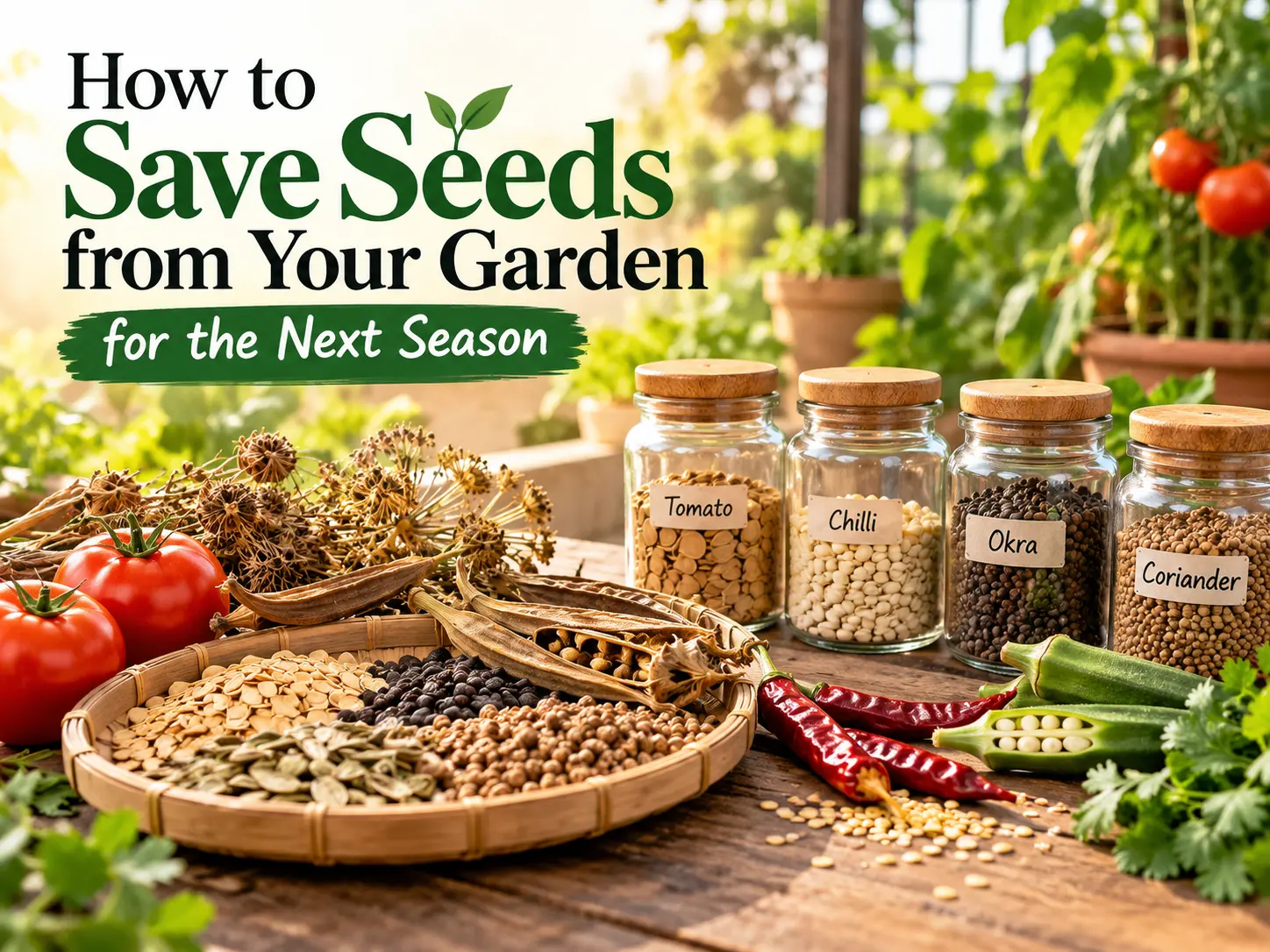
Quick answer: Save seeds only from healthy, open-pollinated (non-hybrid) plants. For dry-seeded crops like beans and okra, let pods dry on the plant, then shell and dry further. For wet-seeded crops like tomato, ferment the pulp 2-3 days, rinse, and dry fully. Store bone-dry seeds in labelled envelopes in a cool, dark place for 1-3 years of viability.
One of the quiet joys of gardening is realising you never need to buy certain seeds again. Saving seeds from your own plants is free, deeply satisfying, and over time gives you varieties perfectly adapted to your terrace and climate. It’s also how generations of Tamil families preserved their best crops. Here’s how to save seeds the right way so they actually grow next season.
Saved seeds cost nothing, reduce waste, and let you keep growing the exact plants that did best for you. Each season, the strongest survivors pass on their traits, so your saved seeds gradually become better suited to your local conditions. It’s self-reliant, sustainable, and a beautiful way to stay connected to your garden’s lineage.
For seed saving to work, start with open-pollinated or heirloom varieties, not hybrids. Hybrid (F1) seeds don’t grow true to type — their offspring are unpredictable. Always save from your healthiest, most productive, best-tasting plants, never from weak or diseased ones. You’re selecting the parents of next year’s crop, so choose your champions.
🌿 Keep a record of what you save. Our Gardening Planner Bundle 2025 includes seed-log sheets to track variety, date and germination — mega sale at just ₹20.
If you’re new to this, start with the simple ones. Beans and peas are the easiest — just let pods dry on the plant. Tomato and chilli seeds are easy to extract from ripe fruit. Okra pods dry right on the plant and rattle when ready. Leafy greens like keerai and coriander readily produce seed heads you can collect. Master these before trying trickier cross-pollinating crops.
🫘 Beans are the perfect first seed to save. Grow our Avaraikai (Hyacinth Bean) Seeds, then save pods from your best vines for next season — from just ₹30.
This step makes or breaks seed saving. Seeds must be bone dry before storage, or they’ll mould. Dry them in a shaded, airy spot — never in direct sun, which can damage them. Once fully dry, store in labelled paper envelopes or airtight glass jars, with the variety name and date written on each. Keep them somewhere cool and dark, and add a small packet of dry rice or a few dried neem leaves to absorb moisture and deter insects. Well-stored seeds stay viable for 1–3 years.
Can I save seeds from hybrid plants? Not reliably — hybrids don’t grow true to type. Use open-pollinated or heirloom varieties.
How long do saved seeds last? Most stay viable for 1–3 years if stored cool, dark and dry.
Why do my saved seeds not sprout? Usually they weren’t dried fully or were stored in a humid place.
Which is the easiest seed to save? Beans — just dry the pods on the plant.
Seed saving closes the loop in your garden — from one packet of seeds to an endless free supply. Start with easy crops like beans and tomato, save from your best plants, dry the seeds completely, and store them cool and labelled. Next season, you’ll be sowing a garden that’s truly your own.
🎓 Want a garden worth saving seeds from? Our மாடித்தோட்டம் Terrace Gardening Course (Tamil, 90-day program) helps you grow the healthy, productive plants worth propagating year after year.