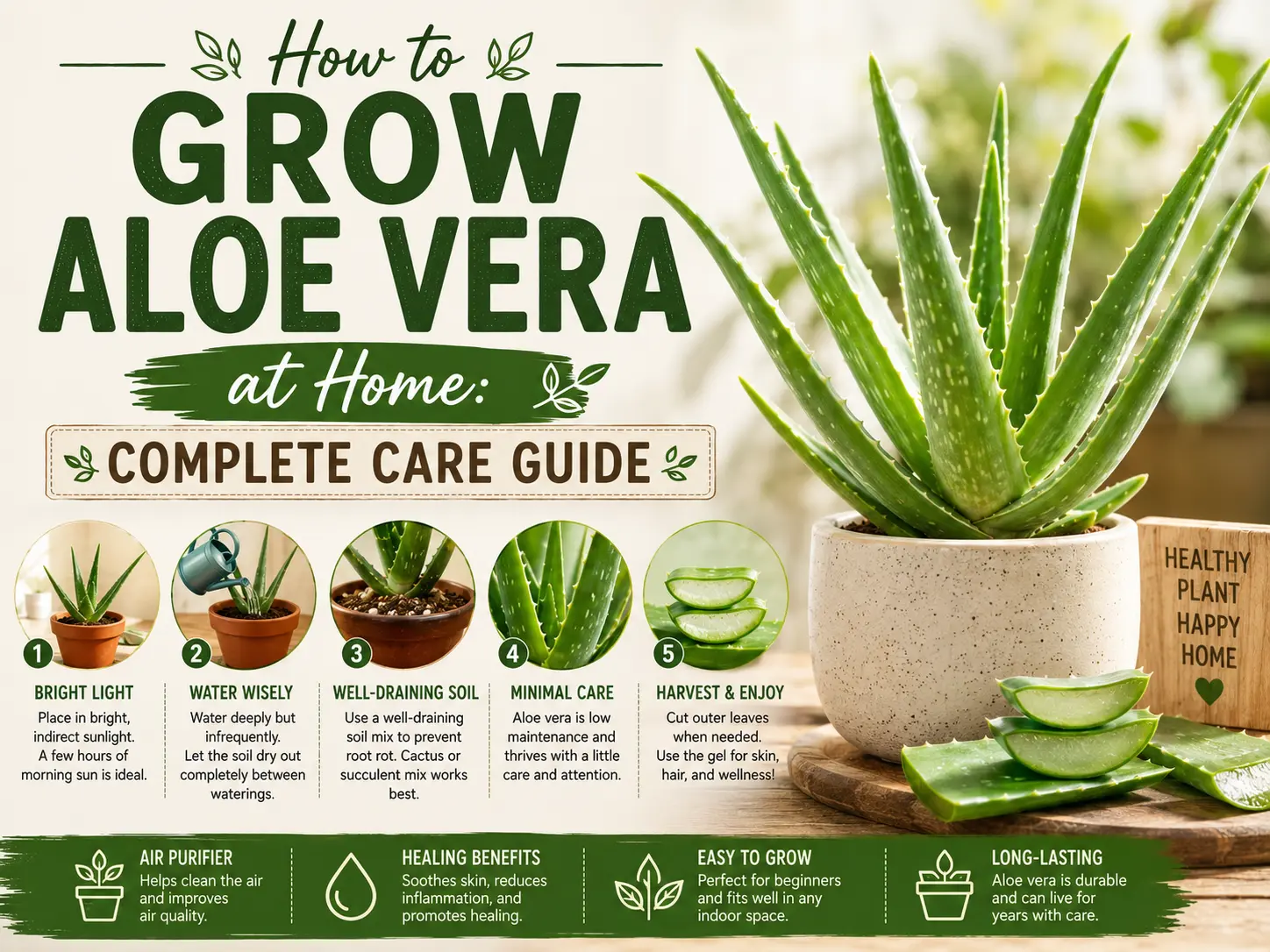
Quick answer: Grow aloe vera (katralai) in a well-draining pot with a sandy soil mix, in 4-6 hours of bright light. Water only when the soil is completely dry — about once a week in summer, less in cooler months. Overwatering is the main cause of failure. Harvest gel from mature outer leaves for skin and hair use.
Aloe vera, known in Tamil as katralai (கற்றாழை), is the perfect plant for anyone who thinks they can't keep plants alive. It stores water in its thick leaves, survives on very little attention, and rewards you with a soothing gel used for skin, hair and minor burns. One healthy plant slowly becomes many through offshoots, so a single purchase can fill your shelf over time. Here's everything you need to grow it well.
Why Aloe Vera Belongs in Every Home
Beyond being almost impossible to kill, aloe vera is genuinely useful. The clear gel inside its leaves cools sunburn, soothes minor cuts, and works as a natural moisturiser and hair conditioner. It is also a tidy, sculptural plant that looks good on a balcony rail or window ledge — practical and decorative at once.
🌵 Skip the seed stage entirely. Our healthy, rooted Aloe Vera Live Plant ships ready to pot — just ₹75 and you're growing from day one.
Choosing the Right Pot and Soil
Aloe vera hates wet feet. Pick a pot with at least one drainage hole — terracotta is ideal because it lets the soil breathe. For soil, never use heavy garden clay alone. Mix two parts red soil or garden soil, one part coarse sand, and one part compost. The sand is essential: it keeps the mix loose so water drains away quickly and the roots never sit in moisture.
Planting Your Aloe
Place your rooted plant in the centre of the pot at the same depth it was growing before, firm the soil gently around the base, and water lightly. Then leave it alone for a few days before watering again — newly potted aloe establishes faster when slightly dry.
Sunlight: The Key to a Strong Plant
Aloe vera loves bright light. Give it 4–6 hours of sunlight daily, ideally morning sun with some afternoon shade in peak summer. Too little light makes the leaves grow thin, pale and floppy; harsh midday sun in summer can scorch them brown. A bright balcony or east-facing windowsill is perfect.
Watering: Less Is More
The number one killer of aloe vera is overwatering. Water only when the soil is completely dry — roughly once a week in summer and once every 10–15 days in cooler or rainy months. When you water, soak thoroughly and let all excess drain out. If the leaves look soft, mushy or yellow, you are watering too much; if they curl and thin, too little.
Feeding and Repotting
Aloe is a light feeder. A spoonful of compost worked into the topsoil every couple of months is plenty. Repot once the plant outgrows its container or produces several pups around the base. To propagate, gently separate a pup with its own roots and plant it in a fresh pot — an easy way to multiply your collection for free.
How to Harvest and Use the Gel
Cut an outer, mature leaf at the base using a clean knife. Let the yellow sap (latex) drain out for a few minutes, then slice the leaf open and scoop out the clear gel. Use it fresh on skin or hair, or store it in the fridge for up to a week. Always patch-test on a small area first if you have sensitive skin.
🛁 Love natural skincare? Pair fresh aloe gel with our chemical-free Herbal Bathing Powder for a fully natural skin-and-hair routine — on sale from ₹120.
Common Problems and Quick Fixes
Brown, mushy leaves point to root rot from overwatering — let the soil dry out fully and reduce watering. Pale, stretched leaves mean it needs more light. Brown leaf tips usually signal sunburn or very dry air; move it to gentler light. Aloe rarely suffers pests, but mealybugs can appear in shade — wipe them off with a neem-oil-dampened cloth.
Frequently Asked Questions
How often should I water aloe vera? About once a week in summer, less in cooler months — only when the soil is fully dry.
Can aloe vera grow indoors? Yes, near a bright window, but it grows fastest with some direct sun.
Why is my aloe turning brown? Usually overwatering or harsh midday sun.
How do I get more plants? Separate the baby pups that grow at the base and pot them individually.
Final Thoughts
Aloe vera asks for almost nothing and gives back plenty. Give it a well-draining pot, bright light, and water only when dry — and you'll have a thriving, useful plant that keeps multiplying for years.
🎓 Enjoying easy wins like aloe vera? Our மாடித்தோட்டம் Terrace Gardening Course (Tamil, 90-day program) teaches the same low-maintenance approach for a whole terrace of vegetables, herbs and fruit.
🌿 Grow Organic · Live Natural — with Sakthivel Organics
Follow us for daily gardening tips, videos and updates:
🛒 Shop organic seeds, tools and garden essentials at sakthivelorganics.com/products