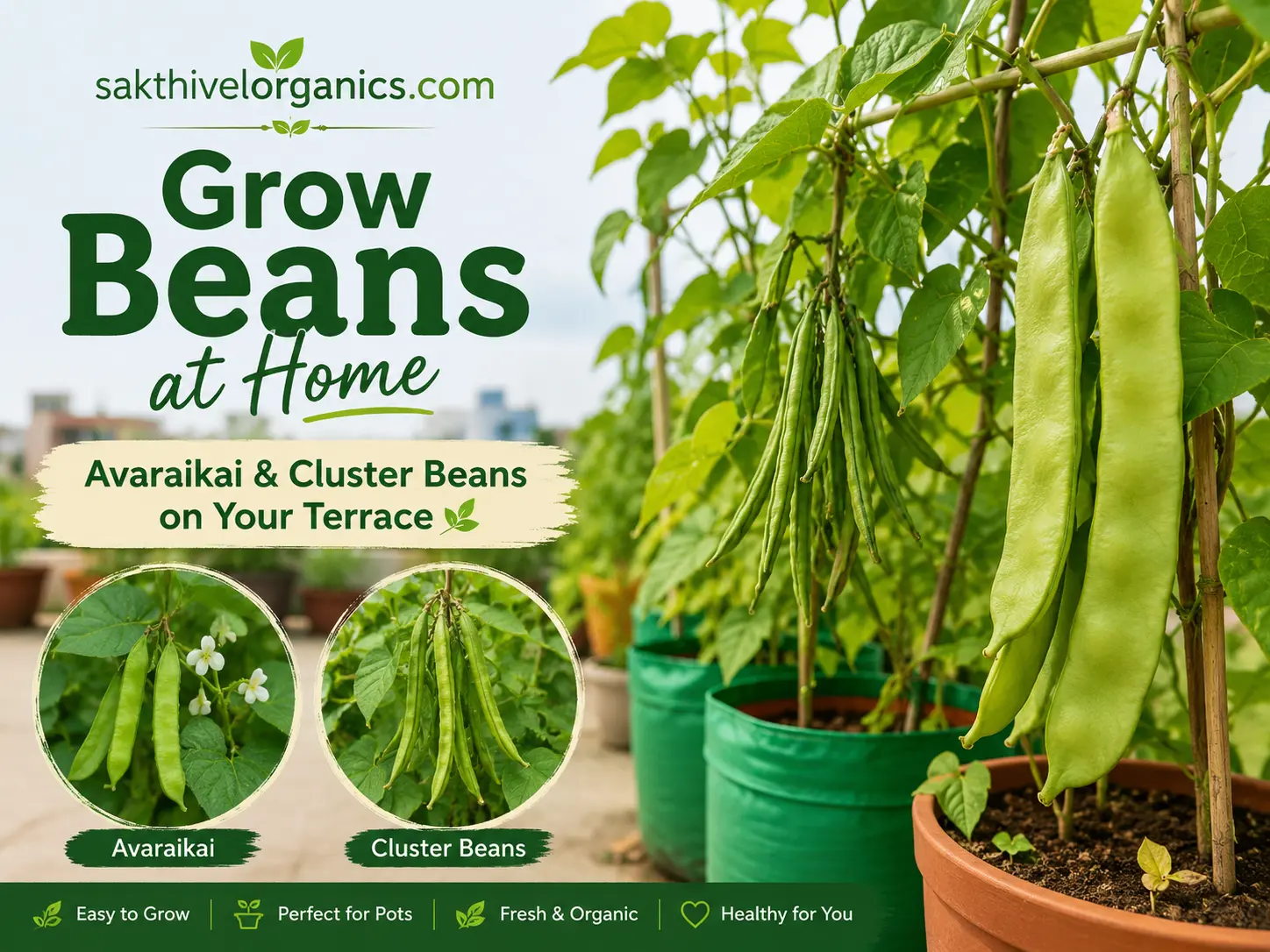
Few crops give as much value for so little effort as beans. Avaraikai (அவரைக்காய், hyacinth beans) and kothavarangai (கொத்தவரங்காய், cluster beans) are South Indian kitchen staples that grow vigorously in our climate, fix nitrogen to enrich your soil, and keep producing pods for weeks. Better still, they grow upward on a trellis, so they fit perfectly into compact terrace and balcony gardens. Here's how to grow both successfully.
Why Grow Your Own Beans?
Beans are among the most generous vegetables for a home gardener. A few plants on a trellis can yield handfuls of pods every few days through the season. As legumes, their roots host bacteria that pull nitrogen from the air into the soil, leaving your pot richer for the next crop. They are also naturally pest-resistant and need very little fuss once established.
Avaraikai vs Cluster Beans: What's the Difference?
Avaraikai (hyacinth beans) is a climbing vine that produces flat, tender pods and beautiful purple-tinged flowers. It needs strong vertical support and rewards you over a long season. Cluster beans (kothavarangai) grow as bushier, semi-climbing plants with slender pods borne in clusters; they are quicker to mature and tolerate heat and dry spells exceptionally well. Growing both gives you variety and a staggered harvest.
Step 1: Pots, Soil and Support
Use a pot or grow bag at least 12 inches deep. Fill it with a mix of two parts garden soil, one part compost and one part coco peat or sand for drainage. Because both beans climb, set up support early — a few bamboo stakes, a string trellis tied to a railing, or a mesh net against a wall all work well. Putting support in at sowing time avoids disturbing roots later.
Step 2: Sowing the Seeds
Soak the seeds overnight to speed germination. Sow them 2 cm deep, 2–3 seeds per pot, and water gently. They sprout in 5–8 days. Once seedlings are a few inches tall, keep the strongest one or two per pot. As the vines grow, gently guide the tendrils onto your trellis — they will climb on their own from there.
Step 3: Sunlight and Watering
Beans need 5–6 hours of direct sun to flower and fruit well. Water when the top inch of soil is dry, keeping the soil evenly moist during flowering and pod formation. Avoid waterlogging, which causes root problems. Cluster beans in particular are drought-tolerant, so err on the drier side for them.
Step 4: Feeding (Go Easy)
Because beans make their own nitrogen, they need little feeding. Skip nitrogen-heavy fertilisers, which produce leaves instead of pods. A light dose of compost or a potassium-rich feed like wood ash or banana-peel tea once a month encourages flowering and stronger pods.
Pests and Organic Care
Watch for aphids and pod borers. A neem oil spray every 7–10 days keeps them in check, and hand-picking any borer-damaged pods stops the spread. Good airflow around the vines — achieved by not overcrowding plants — prevents most fungal issues during humid weather.
Step 5: Harvesting
Pick pods while they are young, tender and snap cleanly — usually 50–70 days after sowing for cluster beans and a little longer for avaraikai. Harvest every 2–3 days. Like okra, beans respond to frequent picking by producing more, so don't let pods over-mature on the vine unless you want to save seeds.
Saving Seeds for Next Season
Leave a few healthy pods to dry fully on the plant until brittle. Shell out the beans, dry them another day or two, and store in an airtight jar with a little dried neem. You'll have free seeds for your next sowing — one of the quiet joys of growing legumes.
Frequently Asked Questions
Do beans need a trellis? Avaraikai definitely does; cluster beans benefit from light support but can manage with less.
How long until harvest? Cluster beans in about 50–60 days; avaraikai in roughly 70–90 days.
Why are there flowers but no pods? Often too much shade, irregular watering, or excess nitrogen.
Can I grow beans in summer? Cluster beans handle heat well; avaraikai prefers the milder months and monsoon season.
Final Thoughts
Beans are a terrace gardener's best friend — vertical, productive and soil-enriching. Set up a simple trellis, sow avaraikai and cluster beans together, and you'll enjoy fresh pods for weeks while your soil quietly gets healthier.
🌿 Grow Organic · Live Natural — with Sakthivel Organics
Follow us for daily gardening tips, videos and updates:
🛒 Shop organic seeds, tools and garden essentials at sakthivelorganics.com/products