10 Reasons Your Garden Is Failing (And How to Fix Them)

Learn the top 10 gardening mistakes that cause plants to die and discover simple solutions to grow healthy, thriving plants in your home or terrace garden. 🌱
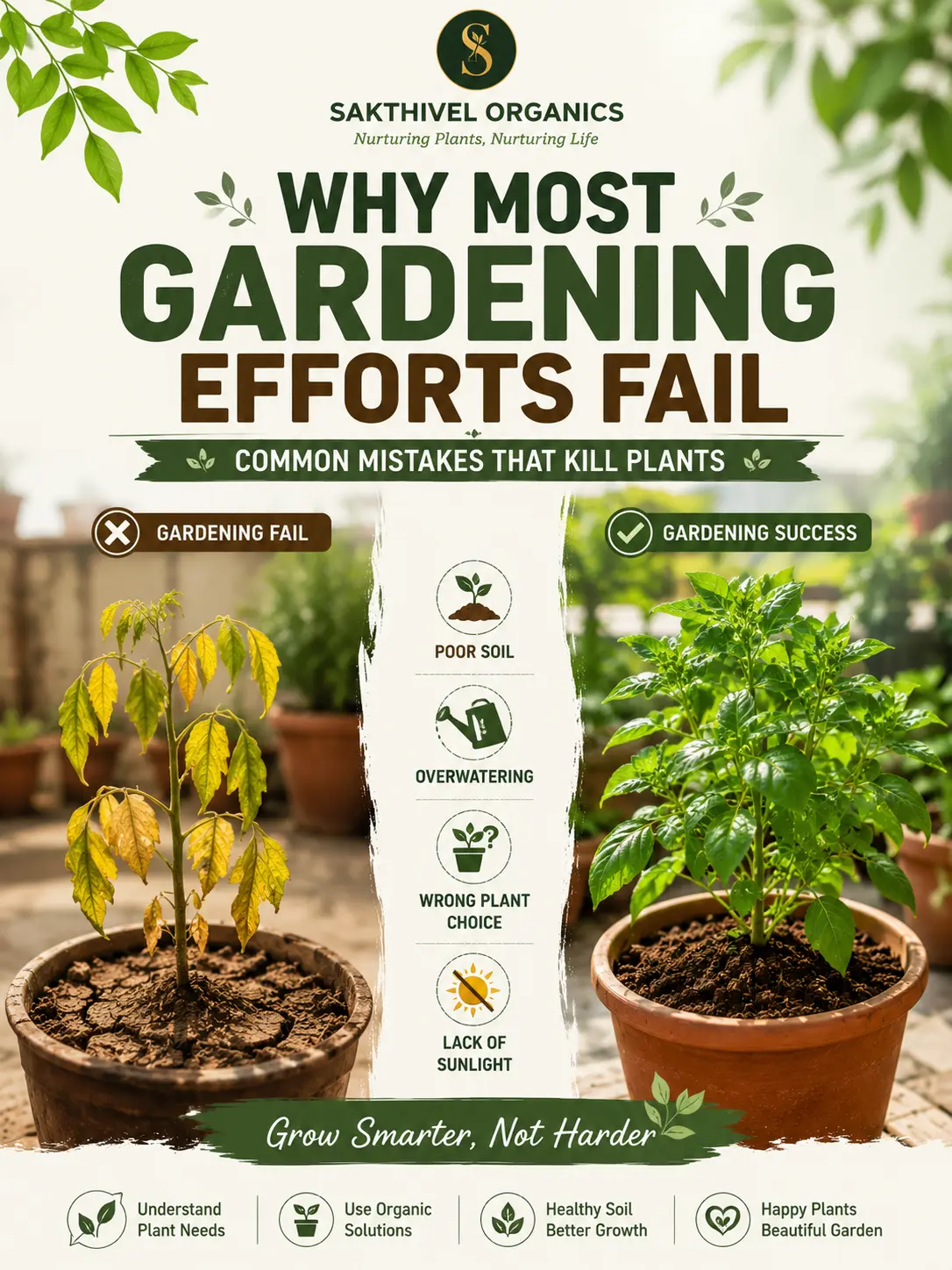
Gardening looks simple put a seed in soil, add water, and wait for it to grow. But any gardener knows the truth: plants die easily, and what starts with excitement often ends in disappointment.

If you’ve ever asked yourself, “Why do my plants always die?”, the answer is not bad luck it’s misunderstanding nature’s rules. Most gardening failures happen because of small mistakes that build up over time. Let’s explore them one by one in detail and learn how to fix them.

🌿 1. Not Knowing Your Plants

Every plant is like a person with its own likes and dislikes. Some crave sunlight from dawn to dusk, while others wilt at the slightest glare. Some grow happily in sandy soil, while others demand constant moisture and shade.

When we bring a plant home, it’s like adopting a living being it has needs that can’t be ignored. The first mistake most gardeners make is choosing plants based only on appearance, not on understanding their requirements. That’s like adopting a fish and expecting it to live on land.

The Problem:

Beginners often buy random plants because they look pretty or trendy. A cactus placed indoors in low light or a fern kept under full sun are both set up for failure.

What Happens:

When the plant’s needs don’t match its environment, it becomes weak, attracts pests, and dies prematurely.

The Fix:
  • Learn about each plant before buying. Check for sunlight, watering needs, soil type, and temperature.

  • Use apps like Sakthivel Organics Plant identifier, Google Lens, or PictureThis to identify plant types and get care tips.

  • Group plants based on their needs, e.g., place all sunlight-loving plants together near a bright window, and shade-tolerant ones in the corner.

Example:
If you live in a hot city like Chennai or Hyderabad(indian cities), succulents, hibiscus, and curry leaves will thrive in the sun, but money plants, ferns, and peace lilies will struggle without shade.

💧 2. Overwatering and Underwatering

Water gives life, but it also takes it away. This is one of the most heartbreaking lessons for new gardeners.
Many people think watering plants daily means showing love. But love in excess can suffocate.

Just like humans, plants need balance. Roots breathe through air pockets in the soil. When the soil is constantly soaked, those air pockets vanish, and roots begin to rot quietly beneath the surface. On the other hand, skipping watering for too long leaves roots dry and brittle, starving the plant from within.

The Problem:

Many beginners think watering daily equals care. Unfortunately, this leads to root rot — when roots drown and suffocate.
On the other hand, some forget to water for days, leaving plants dehydrated and dry.

Signs of Overwatering:

  • Yellow, droopy leaves

  • Mushy soil

  • Foul smell near roots

Signs of Underwatering:

  • Dry, brown leaf edges

  • Soil pulling away from the pot sides

  • Stunted growth

The Fix:
  • Always check the soil before watering. Insert your finger 1 inch deep — if it feels dry, water; if moist, skip.

  • Use pots with drainage holes to prevent water stagnation.

  • Morning watering (before 9 AM) is best. Evening watering may lead to fungal infections in humid climates.

Pro Tip:
Use a spray bottle or drip system for small plants instead of pouring large amounts.

☀️ 3. Wrong Sunlight Exposure

Sunlight is the energy that drives life in your garden. It’s the invisible fuel behind every leaf’s green colour and every flower’s bloom. But not all sunlight is the same; morning sunlight, afternoon glare, and reflected balcony light all affect plants differently.

Many beginner gardeners underestimate how much sunlight their plants actually get. A corner that looks “bright” to your eyes might still be too dim for a sun-loving plant. Likewise, a windowsill that gets direct afternoon sun might scorch sensitive leaves within days

The Problem:

Balcony gardeners often think all light is the same, but intensity, duration, and direction matter.

The Fix:

Observe your space for one full day. Note where sunlight hits and for how long.
Then match plants to these zones:

Sunlight TypeDurationSuitable Plants
Full Sun6+ hoursTomato, chilli, hibiscus, rose
Partial Shade3–5 hoursMint, spinach, snake plant
Low Light<3 hoursMoney plant, ZZ plant, peace lily

Extra Tip:
In hot Indian summers, even full-sun plants benefit from a shade net (50%) to reduce burning.

🌾 4. Poor Soil Quality and Lack of Compost

Soil is not “just dirt.” It’s a living, breathing world beneath our feet filled with microorganisms, earthworms, and minerals that keep plants alive. Think of soil as the stomach of your plant: it digests nutrients and delivers them to the roots.

But many gardeners make the mistake of using soil straight from the ground or old potting mix without checking its texture or fertility. Over time, the soil becomes hard, loses aeration, and suffocates roots. A plant growing in lifeless soil is like a person eating cardboard; there’s nothing nutritious to absorb.

The Problem:

Poor soil quality is one of the main reasons plants grow weak, stay small, or never flower. Compact soil blocks air circulation, and nutrient imbalance causes yellowing leaves or stunted growth. Using garden soil alone, especially in pots, leads to poor drainage and root rot.

The Fix:

Make your own balanced soil mix:

Add a handful of neem cake powder or vermicompost every 15–20 days. This prevents pests and boosts nutrition naturally.

Pro Tip:
If your soil becomes hard after watering, mix a bit of cocopeat to retain moisture.

🪴 5. Neglecting Routine Maintenance

When you first start gardening, excitement is high, you water daily, check every new leaf, and share pictures proudly. But after a few weeks, the enthusiasm fades. Life gets busy, and the plants are left alone to fend for themselves.

Gardening is not a one-time act; it’s a relationship. Plants can’t talk, but they constantly send signals: yellow leaves, drooping stems, slow growth. These are their cries for help. Ignoring them is like ignoring a child who needs attention.

The Problem:

Leaves dry, weeds grow, and pests attack — all while the gardener waits for flowers.

The Fix:

Make gardening part of your daily routine:

  • Spend 10 minutes every morning to observe changes.

  • Remove yellow or damaged leaves.

  • Rotate pots weekly for even sunlight.

  • Loosen top soil every few days for better air flow.

  • Fertilize monthly with organic compost or liquid manure.

Consistency is what separates a failed garden from a thriving one.

Use pruner if needed: buy from Amazon here : Hand Pruner Cutter – 1 Pc (Steel Blades)

🐛 6. Ignoring Pests and Diseases

No matter how healthy your plants look, pests will visit sooner or later. Aphids, mealybugs, fungus, and caterpillars are nature’s way of maintaining balance, but in small home gardens, that balance often tips too far.

A few white bugs or spots on leaves may look harmless, but in a few days, they can multiply and destroy entire plants. Many gardeners notice the damage only after it’s too late.

The Problem:

When pests aren’t controlled early, they spread quickly from one plant to another. Overwatering and lack of airflow create the perfect conditions for fungus and mould. Chemical pesticides might kill the pests, but they also harm the plant and beneficial insects.

The Fix:
  • Inspect the underside of leaves regularly.

  • Use neem oil spray weekly (5 ml neem oil + a few drops of liquid soap + 1 L water).

  • Gently wipe leaves if you see mealybugs.

  • Avoid overwatering — it attracts fungus.

  • Introduce natural pest-controllers like ladybugs if possible.

Remember: Prevention is easier than cure in gardening.

🧠 7. Expecting Instant Results

In the age of fast food and instant delivery, we’ve lost the art of waiting. But gardening is all about patience.
A seed doesn’t sprout overnight, and a flower doesn’t bloom on command. Plants grow in their own rhythm guided by the seasons, the sun, and their inner energy.

The Problem:

People expect visible results in a week. When seeds don’t sprout quickly or plants don’t flower soon, they give up.

The Truth:

Plants follow their own timeline. Some germinate in 3 days; others take 3 weeks. Some bloom only once a year.

The Fix:
  • Trust the process. Some seeds take 3 days, others take 3 weeks.

  • Keep a growth journal — write down sowing dates and note progress weekly.

  • Choose a few fast-growing plants (like mint, coriander, or okra) to stay motivated.

💡 Remember: The joy of gardening isn’t just in seeing the flower, it’s in watching the journey from seed to bloom. Once you learn patience, your plants reward you in abundance. 🌸

Bonus Tip:

Some plants are fast-growing (like mint or okra). Start with them to build confidence.

🌼 8. Planting Out of Season

Every plant has a season — a time when temperature, sunlight, and humidity align perfectly. When you go against that rhythm, plants struggle.

Many gardeners plant everything at once, not realising that certain vegetables or flowers simply can’t survive at that time.
For example, trying to grow tomatoes in heavy monsoon or spinach in mid-summer is like asking a polar bear to enjoy Chennai(India) heat; it won’t end well.

The Problem:

Out-of-season planting leads to weak plants, poor germination, and frequent diseases. Seeds may not sprout at all, or plants may remain small and lifeless.

The Fix:

Learn your local growing calendar.
Here’s a quick guide for tropical climates (like South India):

SeasonBest Plants
Summer (Mar–Jun)Okra, brinjal, hibiscus, marigold
Monsoon (Jul–Sep)Mint, coriander, spinach, colocasia
Winter (Oct–Feb)Tomato, beans, chrysanthemum, cabbage
Pro Tip:

Store seeds properly cool, dry, airtight containers. Expired seeds often fail to germinate.

🌍 9. Ignoring Local Climate and Space

Every garden is unique. A terrace in Chennai is different from a balcony in Bengaluru or a backyard in Shimla.
Temperature, humidity, and wind patterns all influence what thrives in your space.

The Problem:

Trying to grow everything without considering your environment often leads to disappointment. A plant that thrives in cool hills may wither in coastal humidity. Likewise, indoor plants can burn when exposed to open terrace sun.

The Fix:
  • Understand your microclimate — is it humid, dry, windy, or shaded?

  • Choose plants that match your region’s weather.

  • For small spaces, try vertical gardening, hanging pots, or rail planters to maximize space.

  • Keep shade-loving plants under cover and sun-lovers on the outer edges.

💡 Pro Tip: Observe where moss grows or where the sun hits longest — nature already tells you where each plant will feel most at home. 🌞

⚙️ 10. Poor Planning and Overcrowding

The excitement of starting a garden often makes us buy too many plants at once. Rows of colourful pots look beautiful until they start competing for space, water, and sunlight.

Just like humans in a crowded room, plants struggle to breathe when packed too closely. Their roots tangle, airflow decreases, and diseases spread easily.

The Problem:

Overcrowding limits growth and increases pest problems. New gardeners often don’t realize that even small herbs need personal space to spread roots and leaves freely.

The Fix:
  • Always follow spacing guidelines on seed packets.

  • For container gardening:

    • 6-inch pot → Herbs (mint, coriander, basil)

    • 10-inch pot → Leafy greens (spinach, lettuce)

    • 12-inch+ → Fruiting plants (tomato, brinjal, chilli)

  • Plan your layout on paper before planting — visualize space, light direction, and water access.

💡 Pro Tip: Instead of crowding many small plants, grow fewer but healthier ones. A single thriving tomato plant is better than five struggling ones. 🍅

💚 The Final Truth: Gardens Don’t Fail, Gardeners Stop Observing

A failing plant always gives signs: yellow leaves, drooping stems, dry soil, or weak blooms.
The real cause of gardening failure is not “bad luck” but lack of attention.

The most successful gardeners aren’t experts; they’re observers. They listen, learn, and adjust.
Once you start noticing these small signals, your garden will speak to you, and you’ll rarely lose a plant again.

Gardening is not about perfection. It’s about connection with soil, sunlight, and life itself. 🌸