Grow Organic · Live Natural

Composting is something every family should try. It’s simple, rewarding, and brings everyone together in one meaningful activity. It’s more than just recycling kitchen waste; it’s about building a conscious lifestyle where we see how our everyday waste can turn back into life-giving soil. When we compost, we create a small but powerful circle of sustainability right in our homes.
To start composting, you don’t need fancy tools or a large space. You can begin with whatever you have a three-bucket system, a single bin, or even a small compost pile. The key ingredients are simple: a good composting medium and your kitchen waste. From that, nature takes care of the rest.

How Composting Works
Composting is a natural decomposition process where microorganisms convert organic waste into nutrient-rich soil. When we combine our “greens” (like kitchen scraps) with “browns” (like dry leaves or coco peat) and give them the right amount of air and moisture, we create the perfect environment for nature to do its magic.
Here’s the simple science behind it:
Greens: Provide nitrogen vegetable peels, fruit waste, coffee grounds.
Browns: Provide carbon dry leaves, shredded paper, coco peat.
Air + Moisture: Help bacteria break down materials efficiently.
How Composting Works
Composting is a natural decomposition process where microorganisms convert organic waste into nutrient-rich soil. When we combine our “greens” (like kitchen scraps) with “browns” (like dry leaves or coco peat) and give them the right amount of air and moisture, we create the perfect environment for nature to do its magic.
Here’s the simple science behind it:
Greens: Provide nitrogen — vegetable peels, fruit waste, coffee grounds.
Browns: Provide carbon — dry leaves, shredded paper, coco peat.
Air + Moisture: Help bacteria break down materials efficiently.
Step-by-Step Composting Guide
1. Choose Your Compost Bin 🪣
Start with any available container — an old plastic bucket, earthen pot, or metal drum. If you live in an apartment, go for a 3-tier bucket system (one for fresh waste, one for semi-done compost, one for ready compost). For terrace gardens or backyards, larger bins or compost pits work well.
💡 Tip: Drill small holes in your container to allow airflow.
2. Add Layers Like a Lasagna 🍂
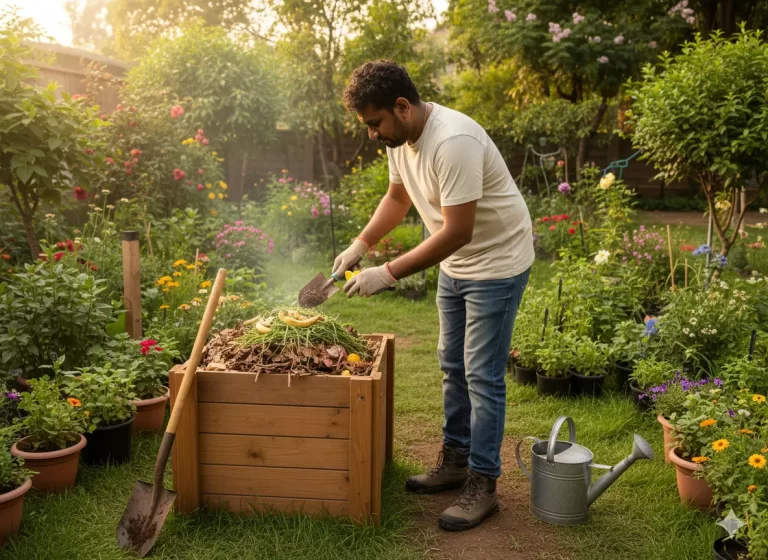
First, add a layer of dry leaves or coco peat.
Next, add your kitchen waste — peels, fruit skins, leftover rice, tea powder, etc.
Then cover it again with dry material to lock the smell.
Repeat this layering process every day.
3. Keep It Balanced
If it smells bad → Add more dry materials.
If it’s too dry → Sprinkle a little water.
Stir it every few days for air circulation.
Maintaining the right balance keeps your compost active and healthy.
4. Harvesting Black Gold 🌿
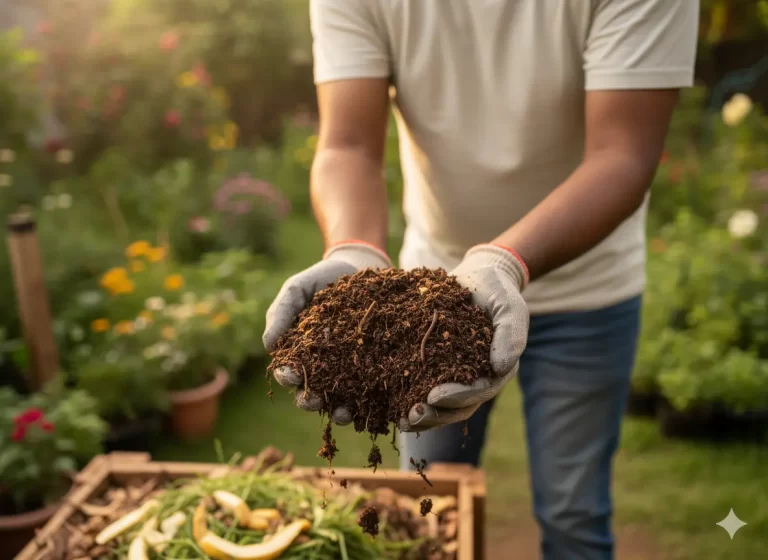
In 45–60 days, the waste turns into dark, earthy, crumbly compost — that’s your garden gold! It should smell like fresh soil. You can sieve it once and use it in your pots or store it in a covered container for later.
Common Mistakes to Avoid
🚫 Don’t add cooked food, meat, dairy, or oily items.
🚫 Don’t let the pile get waterlogged or completely dry.
🚫 Don’t forget to stir occasionally — air helps decomposition.
Correcting these small issues ensures faster composting and odor-free bins.
Why You’ll Love Composting
🌿 Reduces household waste drastically
🌿 Enriches your garden soil naturally
🌿 Promotes healthy plant growth and blooming
🌿 Teaches kids and family members about sustainability
🌿 Gives deep satisfaction knowing your waste is reborn as life
Turning Waste into Worth
Composting reminds us that nothing in nature truly goes to waste. Every peel, leaf, and leftover has a second life as fertile soil. By starting a small compost setup at home, we take a simple step toward a greener planet. Let’s make it a daily habit and inspire others to do the same. Remember, big change begins with small, conscious actions. 🌎💚
Follow us on social below and let’s keep growing, sharing, and composting together 💚🌱