Sakthivel Organics
Grow Organic · Live Natural
Grow Organic · Live Natural

Grow Organic · Live Natural
Learn how to prune plants for more flowers and fruits — what pinching does, where to cut, when to do it, and simple pruning steps for chilli, tomato, roses and more.
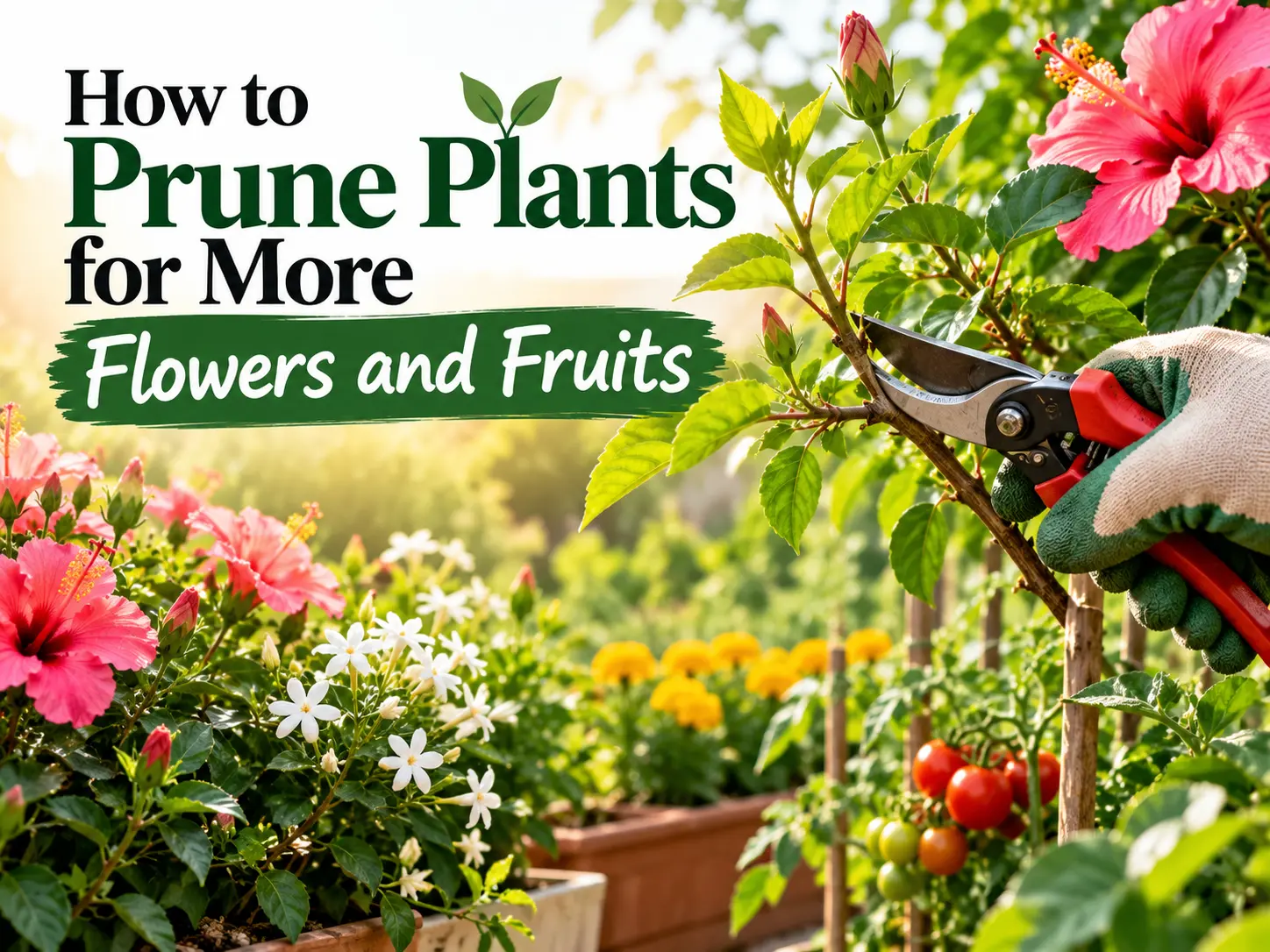
Quick answer: Prune for more flowers and fruits using three techniques: pinch young growing tips to encourage bushiness, deadhead spent flowers to trigger new blooms, and thin overcrowded or dead branches for airflow. Cut just above a leaf node at a slight angle, and never remove more than one-third of the plant at once.
It feels wrong to cut a healthy plant — but pruning is one of the most powerful things you can do for a bigger, more beautiful harvest. A few well-placed cuts redirect the plant’s energy away from aimless growth and into flowers and fruit. Learn where and when to snip, and you’ll transform leggy, sparse plants into bushy, productive ones. Here’s how.
A plant has limited energy. Left alone, much of it goes into long, leafy stems and old, tired growth. When you remove the right parts, you signal the plant to branch out and channel its resources into flowering and fruiting instead. Pruning also improves airflow and light penetration, which means fewer diseases and stronger blooms.
Pinching means removing the soft growing tip of a stem with your fingers or shears. This breaks the plant’s tendency to grow tall and single-stemmed, prompting it to send out multiple side branches — and more branches mean more flowering points.
Deadheading is removing spent, faded flowers. It stops the plant from wasting energy on seed-making and pushes it to produce a fresh flush of blooms instead. It’s the single best habit for flowering plants.
Thinning removes overcrowded, weak, dead or inward-growing branches. This opens the plant up to light and air, reducing fungal problems and directing strength to the healthiest stems.
✂️ Clean cuts heal faster. Our 3-Piece Gardening Tools Combo includes sharp stainless-steel pruning shears for precise cuts that don’t crush stems — plus a hand cultivator and trowel, from ₹499.
Chilli & Tomato: Pinch the early growing tips for bushier plants, and remove the small “suckers” that grow in the joints of tomato stems to focus energy on fruit. Roses & Hibiscus: Deadhead spent flowers and trim leggy stems to trigger fresh blooms. Basil & Mint: Pinch the tops regularly — this both bushes them out and gives you a harvest. Curry Leaf: Trim the top to keep it bushy and within easy reach rather than tall and bare.
🍆 Practise on a productive crop. Pinching young Brinjal (Kathirikai) Seeds plants gives you bushier, higher-yielding bushes — just ₹50.
Pinch young plants early, while they’re actively growing. Deadhead flowering plants continuously through the blooming season. Do heavier shaping or thinning in the cooler, milder parts of the year when plants recover fastest, and always prune in the morning or evening rather than under harsh midday sun.
Will pruning hurt my plant? No — done correctly, it strengthens the plant and boosts flowering.
How much can I cut at once? Never more than about one-third of the plant.
Where exactly do I cut? Just above a leaf node, at a slight angle.
Does pinching really give more flowers? Yes — it creates more branches, and more branches mean more flowering points.
Pruning isn’t about cutting your plants back — it’s about pointing their energy where you want it. Pinch for bushiness, deadhead for continuous flowers, thin for health, and use clean sharp tools. A little brave snipping now means a far more generous harvest later.
🎓 Want plant-by-plant pruning schedules, not just general rules? Our மாடித்தோட்டம் Terrace Gardening Course (Tamil, 90-day program) covers maintenance and pruning for every crop across the full growing season.