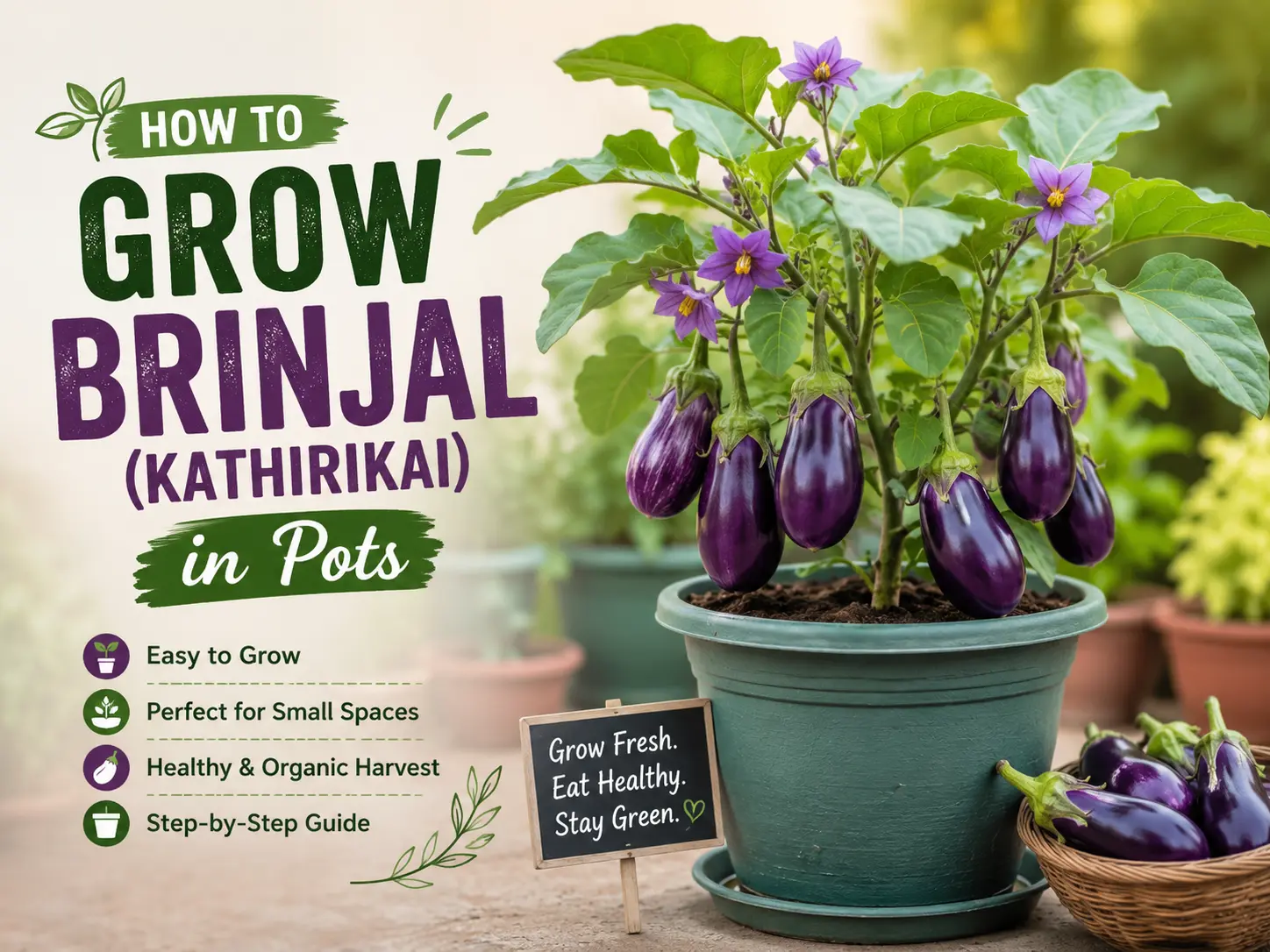
Brinjal — kathirikai (கத்திரிக்காய்), eggplant or aubergine — is one of the most productive vegetables you can grow in a container. A single healthy plant can give you brinjals for months, and it thrives in the warm climate of Tamil Nadu. Whether you have a terrace, balcony or sunny windowsill, this guide takes you from seed to a basketful of glossy, home-grown brinjals.
Why Grow Brinjal in Pots?
Brinjal is a warm-season perennial that fruits generously when happy. Growing it in pots lets you control the soil, move it to the sunniest spot, and avoid soil-borne diseases. Store-bought brinjals are heavily sprayed, so growing your own means clean, pesticide-free fruit. Best of all, brinjal plants are attractive and keep producing for six months or more.
Choosing the Right Variety
For containers, choose compact, high-yield varieties. Purple long brinjal (the classic Tamil kathirikai) is reliable and prolific; small round green or purple types are also excellent for pots.
Step 1: Sowing the Seeds
Sow brinjal seeds in a seed tray filled with a light mix of coco-peat and compost. Plant them about half a centimetre deep, water gently, and keep warm and bright. Seeds germinate in 8–12 days. Once seedlings have 4–5 true leaves (around 4–6 weeks), they are ready to transplant.
Step 2: Choosing the Pot and Soil
Use a pot at least 14–16 inches wide and deep (about 15–20 litres) with good drainage. Fill with a rich, well-draining mix: two parts garden soil, one part compost or vermicompost, and one part coco-peat or sand. Add a handful of neem cake to deter soil pests.
Step 3: Transplanting
Transplant one seedling per pot in the evening to avoid shock. Bury it slightly deeper than it was in the tray, firm the soil, and water well. Place where it gets at least 6 hours of direct sunlight.
Step 4: Watering and Feeding
Keep the soil consistently moist but not soggy. Brinjal is a heavy feeder — feed every two weeks with organic liquid fertiliser, compost tea, or diluted cow-dung slurry. When flowering begins, a potassium-rich feed like banana-peel tea boosts fruiting.
Step 5: Supporting the Plant
As the plant grows heavy with fruit, stake it with a bamboo stick to prevent branches from breaking. Pinch the growing tip once the plant is about a foot tall to encourage bushy, multi-branch growth and more flowers.
Common Brinjal Pests and Organic Solutions
- Fruit & shoot borer: Remove and destroy wilted shoots or bored fruit immediately. Spray neem oil weekly as prevention.
- Aphids & whiteflies: Spray neem oil + mild soap, or use yellow sticky traps.
- Mealybugs: Wipe off with a cloth dipped in diluted neem solution.
Step 6: Harvesting
Brinjals are ready 60–80 days after transplanting. Pick them while the skin is glossy and firm — dull skin means over-ripe and seedy. Cut the fruit with a bit of stem attached rather than pulling. Frequent harvesting encourages more production.
Companion Plants and Crop Rotation
Brinjal grows better with the right neighbours. Marigold repels nematodes and pests, while basil and coriander confuse scent-hunting pests. Beans grown alongside fix nitrogen, feeding the hungry brinjal. Avoid planting next to tomato, chilli or potato — they share the same pests and diseases. After a brinjal crop finishes, refresh the pot with new compost and grow a leafy green or legume next, rather than another nightshade.
Extending the Harvest and Overwintering
Brinjal is a perennial in our climate, so with care a single plant can crop for over a year. When fruiting slows, prune back older branches by about a third, top-dress with fresh compost, and resume feeding. Within weeks the plant pushes out fresh shoots and a new wave of flowers and fruit. This rejuvenation pruning keeps one plant productive far longer than starting from seed each season.
Frequently Asked Questions
How many brinjals does one plant give? A healthy potted plant can produce 20–40 fruits over a season of several months.
Why are flowers falling without fruiting? Usually extreme heat, irregular watering, or lack of pollination. Hand-pollinate by gently shaking the plant in the morning.
How big a pot does brinjal need? At least 14–16 inches and 15–20 litres.
Can brinjal grow on a balcony? Yes, with 6 hours of sun and a large enough container.
Hand-Pollination and Boosting Fruit Set
Brinjal flowers are self-pollinating, but on a still terrace they sometimes need help. In the late morning when flowers are fully open, gently flick each flower or lightly shake the plant to spread pollen. An electric toothbrush held against the flower stem mimics a bee's buzz. Do this every couple of days during flowering for a dramatic improvement in fruit set.
Final Thoughts
Brinjal is the gift that keeps giving — one well-cared-for plant can supply your kitchen for half a year. Give it a big pot, plenty of sun, regular organic feeding and a watchful eye for borers, and you'll be harvesting glossy, homegrown kathirikai before you know it.
🌿 Grow Organic · Live Natural — with Sakthivel Organics
Follow us for daily gardening tips, videos and updates:
🛋 Shop organic seeds, tools and garden essentials at sakthivelorganics.com/products