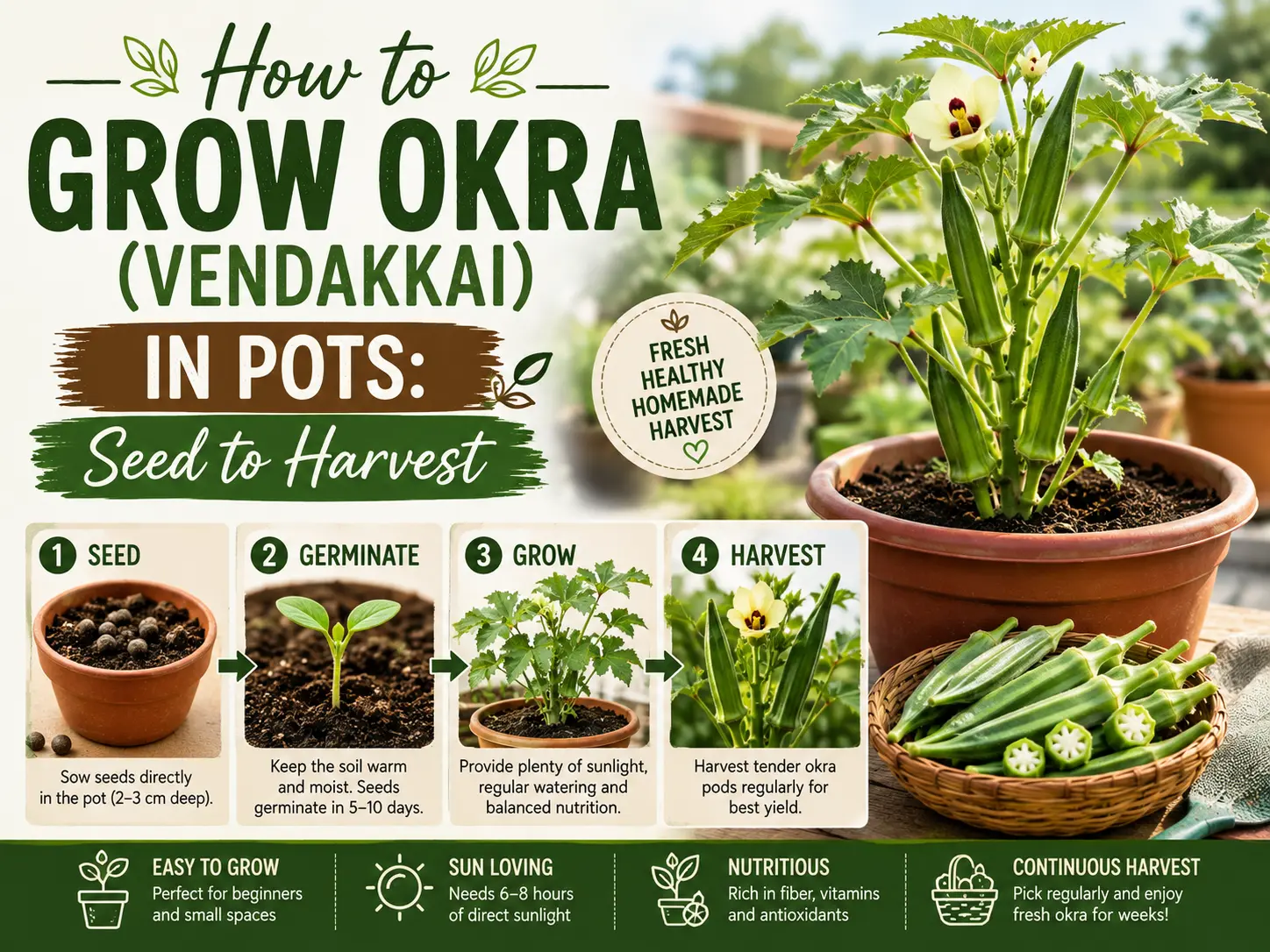
Okra, or vendakkai (வெண்டைக்காய்), is one of the most rewarding vegetables a beginner can grow. It loves heat, shrugs off neglect, and starts handing you pods within two months of sowing. If you have a sunny terrace, balcony or even a bright windowsill, you can grow a steady supply of tender lady's finger without ever visiting the market. Here is exactly how to do it, step by step.
Why Okra Is Perfect for Pot Gardening
Okra thrives in the same warm conditions that define most of the year in Tamil Nadu. It is naturally suited to containers because its roots go down rather than spreading wide, so a single deep pot can support a productive plant. It also flowers and fruits continuously — the more you pick, the more it produces — which makes even three or four plants enough to keep a small family supplied.
What You Need to Get Started
You only need a few basics: a pot or grow bag at least 12 inches deep and 10–12 inches wide, good free-draining soil, quality seeds, and a spot that gets at least 6 hours of direct sunlight. Okra is a sun-worshipper; shade is the single biggest reason home plants stay weak and refuse to fruit.
🌾 Start with reliable seeds. Our high-yield Okra (Vendakkai) Seeds germinate fast and are bred for home gardens — from just ₹30 a packet.
Step 1: Prepare the Soil
Okra likes rich, loose soil that drains well. Mix two parts garden soil or red soil, one part compost or well-rotted cow manure, and one part coco peat or coarse sand. This blend holds nutrients while letting excess water escape, which prevents root rot. Fill your pot to about an inch below the rim.
Step 2: Sow the Seeds
Soak the seeds in water for 8–12 hours before sowing — this softens the hard coat and speeds up germination. Push 2–3 seeds about 1.5 cm deep into the centre of the pot and cover lightly. Water gently. Seeds sprout in 5–8 days in warm weather. Once seedlings are 4 inches tall, keep the strongest one and snip the others at soil level.
Step 3: Sunlight and Watering
Place the pot in the sunniest spot you have. Water when the top inch of soil feels dry — usually daily in peak summer and every other day in cooler months. Okra dislikes both drought and soggy roots, so aim for consistently moist, never waterlogged, soil. Morning watering is best.
Step 4: Feeding for More Pods
About three weeks after germination, start feeding every two weeks. A handful of compost worked into the topsoil, or a diluted organic liquid fertiliser such as panchagavya or seaweed tonic, keeps the plant flowering. Avoid heavy nitrogen feeds, which give you lush leaves but few pods.
Common Pests and Organic Fixes
The usual visitors are aphids, whiteflies and the occasional fruit borer. A weekly neem oil spray (5 ml neem oil + 1 ml mild soap per litre of water, sprayed in the evening) keeps most of them away. Inspect the undersides of leaves regularly and remove any affected pods promptly so the problem does not spread. Yellowing lower leaves usually mean overwatering, not disease.
Step 5: Harvesting at the Right Time
This is where most beginners slip up. Okra pods turn woody and fibrous fast. Harvest when pods are 3–4 inches long and still snap easily — usually 5–6 days after the flower opens. Pick every 2–3 days. Frequent picking signals the plant to keep producing, so regular harvesting actually increases your total yield.
✂️ Harvest cleanly without damaging the plant. A sharp pair of Premium Garden Pruning Shears makes clean cuts on tough okra stalks — now on sale at ₹160.
Keeping the Plant Productive Longer
A healthy okra plant produces for 2–3 months. To extend the harvest, remove any over-mature pods you missed (they drain the plant's energy), pinch off the lowest yellowing leaves, and top-dress with fresh compost monthly. When production finally slows, sow a new batch so you always have plants at different stages.
Frequently Asked Questions
How long does okra take to fruit? Around 45–55 days from sowing to first harvest.
How many plants do I need? Three to four healthy plants comfortably supply a small family during the season.
Why are my okra flowers falling without fruiting? Usually too little sunlight, irregular watering, or excess nitrogen.
Can I grow okra year-round in Tamil Nadu? Yes, with the best results from February to November.
Final Thoughts
Okra is the ideal confidence-building crop: forgiving, fast and generous. Sow a pot this week, keep it in full sun, water steadily, and pick often — within two months you'll be harvesting tender vendakkai straight from your own terrace.
🌿 Grow Organic · Live Natural — with Sakthivel Organics
Follow us for daily gardening tips, videos and updates:
🛒 Shop organic seeds, tools and garden essentials at sakthivelorganics.com/products