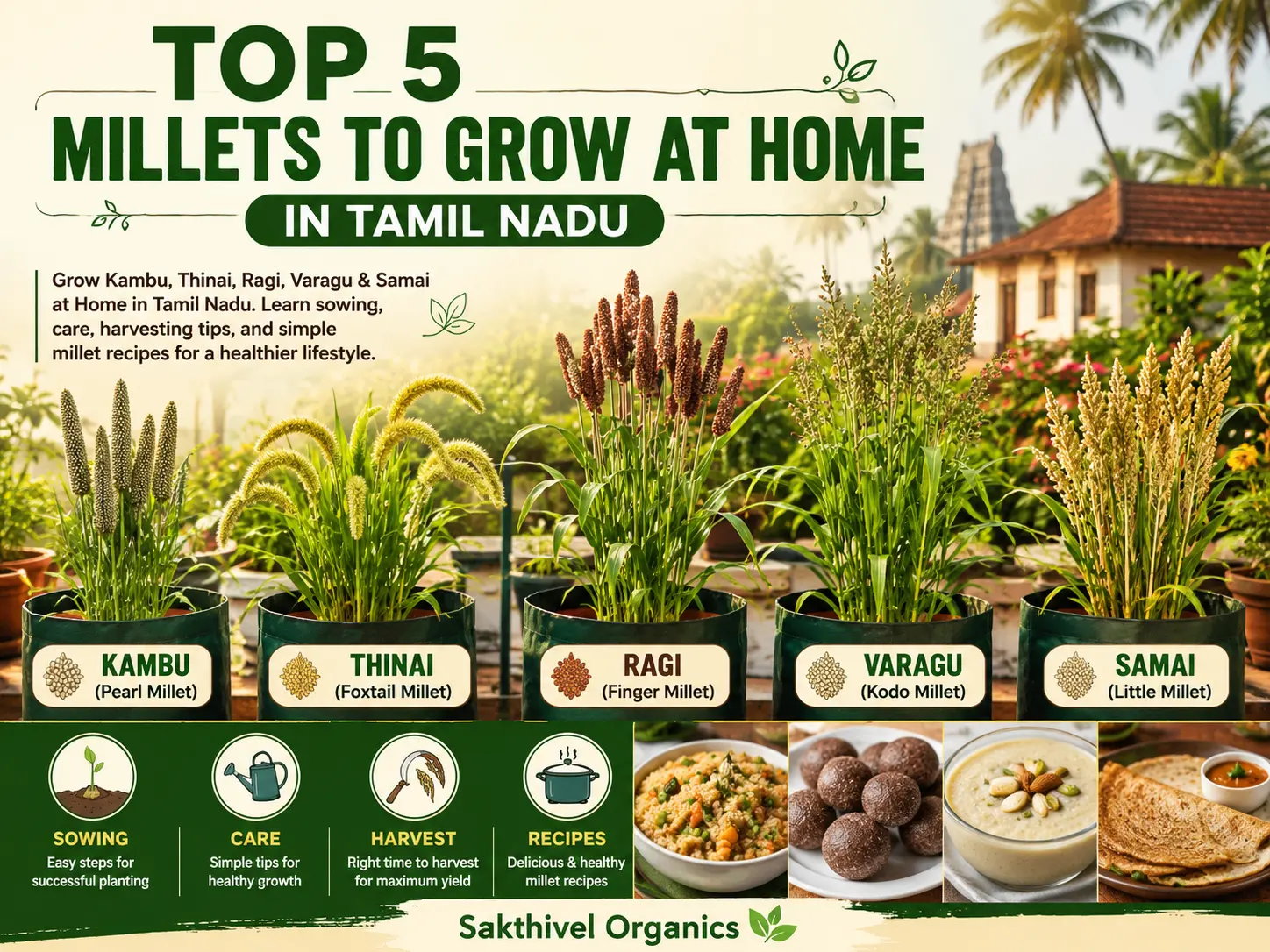
Millets, or siru thaniyam (சிறு தானியம்), were once the staple grains of every Tamil household. Drought-hardy, packed with fibre, and gentle on blood sugar, they almost disappeared during the rice-and-wheat decades — and now they are roaring back. The good news for home gardeners is that millets are some of the easiest, fastest crops you can grow on a terrace or backyard. They need little water, thrive in Tamil Nadu's heat, and reward you with grain in as little as 60–90 days.
In this guide you'll learn the five best millets for home cultivation, exactly how to sow and care for them, when to harvest, and a few simple recipes to bring them to your plate.
Why Grow Your Own Millets?
Millets are among the most sustainable grains on the planet. They survive on rain-fed conditions, resist most pests naturally, and improve soil health rather than depleting it. Nutritionally, they are rich in fibre, iron, calcium and protein, and have a low glycaemic index that helps manage diabetes and weight. Growing them yourself means zero pesticide residue, fresher grain, and a deep satisfaction that no supermarket packet can match — even a few square feet of terrace can give you a meaningful harvest.
The 5 Best Millets for Home Gardens in Tamil Nadu
1. Pearl Millet (Kambu / கம்பு)
Pearl millet is the toughest of the lot and perfect for first-timers. It loves the dry summer heat, grows up to 5–6 feet tall, and matures in around 75–85 days. Sow seeds 1 cm deep in a sunny grow bag or raised bed and thin the seedlings to one strong plant every 15 cm. Kambu koozh (fermented millet porridge) is the classic Tamil summer cooler made from it.
2. Foxtail Millet (Thinai / தினை)
Thinai is the millet most associated with Tamil culture and Lord Murugan. It is small-seeded, quick to mature (70–80 days), and ideal for containers. Foxtail millet tolerates poor soil and intermittent watering, making it forgiving for busy urban gardeners.
3. Finger Millet (Ragi / Kelvaragu / கேழ்வரகு)
Ragi is the nutritional superstar — exceptionally high in calcium and great for growing children and older adults. It grows as a clumping grass with finger-like seed heads and matures in 100–120 days. It handles partial shade better than other millets, so it suits terraces that don't get all-day sun.
4. Kodo Millet (Varagu / வரகு)
Varagu is a hardy, low-maintenance millet that does well even in shallow, less-fertile soil. It matures in about 100–110 days and stores extremely well after harvest. Its high fibre content makes it a favourite for weight management and gut health.
5. Little Millet (Samai / சாமை)
Samai is the fastest of all — some varieties are ready in just 65–75 days. The plant stays compact, which makes it perfect for grow bags and balcony rails. It's an excellent rice substitute and works beautifully in pongal and upma.
🌱 Want to start your own greens-and-grains patch? Pair your millets with fast organic greens like Araikeerai (Amaranthus) Seeds from our store — ready to harvest in weeks and happy alongside millet beds.
How to Sow and Grow Millets: Step by Step
- Choose your container or bed. A grow bag of at least 12 inches depth, a raised bed, or any sunny patch works. Millets need 6+ hours of direct sun.
- Prepare the soil. Mix garden soil, compost and a little sand in equal parts for good drainage. Millets dislike waterlogging.
- Sow the seeds. Scatter or line-sow seeds 1 cm deep. For containers, sow a small pinch and thin later.
- Water lightly. Keep soil just moist until germination (3–5 days). After that, water only when the top inch is dry.
- Thin the seedlings. Once 4–5 inches tall, remove weak seedlings so the strong ones have space.
- Feed monthly. A dose of organic liquid fertiliser or diluted panchagavya once a month is plenty.
Pests, Problems and Organic Fixes
Millets are naturally pest-resistant, but birds love the ripening seed heads. Cover the heads with a light net as they mature. The occasional aphid or stem borer can be managed with a neem oil spray (5 ml neem oil + 1 ml mild soap per litre of water) every 10 days. Avoid overwatering, the single biggest cause of fungal issues in home millet beds.
🗓️ Not sure when to sow in your district? Our Tamil Nadu Season Chart (PDF) shows the exact sowing windows for grains and vegetables month by month.
Harvesting and Storing Your Millets
Your millets are ready when the seed heads turn golden-brown and dry, and the grains feel firm. Cut the heads, sun-dry for 3–4 days, then thresh by rubbing or gently beating. Winnow to remove the chaff, dry the grain fully, and store in airtight containers with a few dried neem leaves. Properly dried millets last 8–12 months.
3 Simple Ways to Cook Home-Grown Millets
Millet Pongal: Cook little millet (samai) with moong dal, pepper, cumin, ginger and ghee just like ven pongal — lighter and more nutritious.
Ragi Koozh / Porridge: Mix finger millet flour into a paste, cook with water and salt, cool, and stir into buttermilk with shallots and green chilli for a cooling summer drink.
Thinai Upma: Roast foxtail millet, cook like rava upma with mustard, curry leaves, vegetables and coconut for a quick, wholesome breakfast.
Growing Millets Through the Seasons
Millets are flexible, but matching them to the right season gives the best yields. In Tamil Nadu, the main rain-fed sowing windows are around the southwest monsoon (June–July) and the northeast monsoon (September–October), when rainfall does most of the watering. Summer crops are possible on a terrace with light irrigation. Sow short-duration types like samai and thinai later in a season, and reserve longer-duration ragi and varagu for the start of a monsoon. Staggering two or three small sowings spreads out your harvest and reduces weather risk.
Frequently Asked Questions
Can I grow millets on a terrace or balcony? Yes. Samai, thinai and kambu grow well in 12-inch grow bags with good sun.
How much water do millets need? Very little — water only when the topsoil is dry.
Which millet is fastest to harvest? Little millet (samai) in 65–75 days.
Do millets need fertiliser? Minimal — a monthly dose of organic compost tea or liquid fertiliser is enough.
Final Thoughts
Growing your own millets connects you to a 4,000-year-old Tamil food tradition while giving you grain that is healthier, cleaner and more sustainable. Start with one easy variety like samai or thinai this season, learn the rhythm, and expand from there.
🌿 Grow Organic · Live Natural — with Sakthivel Organics
Follow us for daily gardening tips, videos and updates:
🛋 Shop organic seeds, tools and garden essentials at sakthivelorganics.com/products