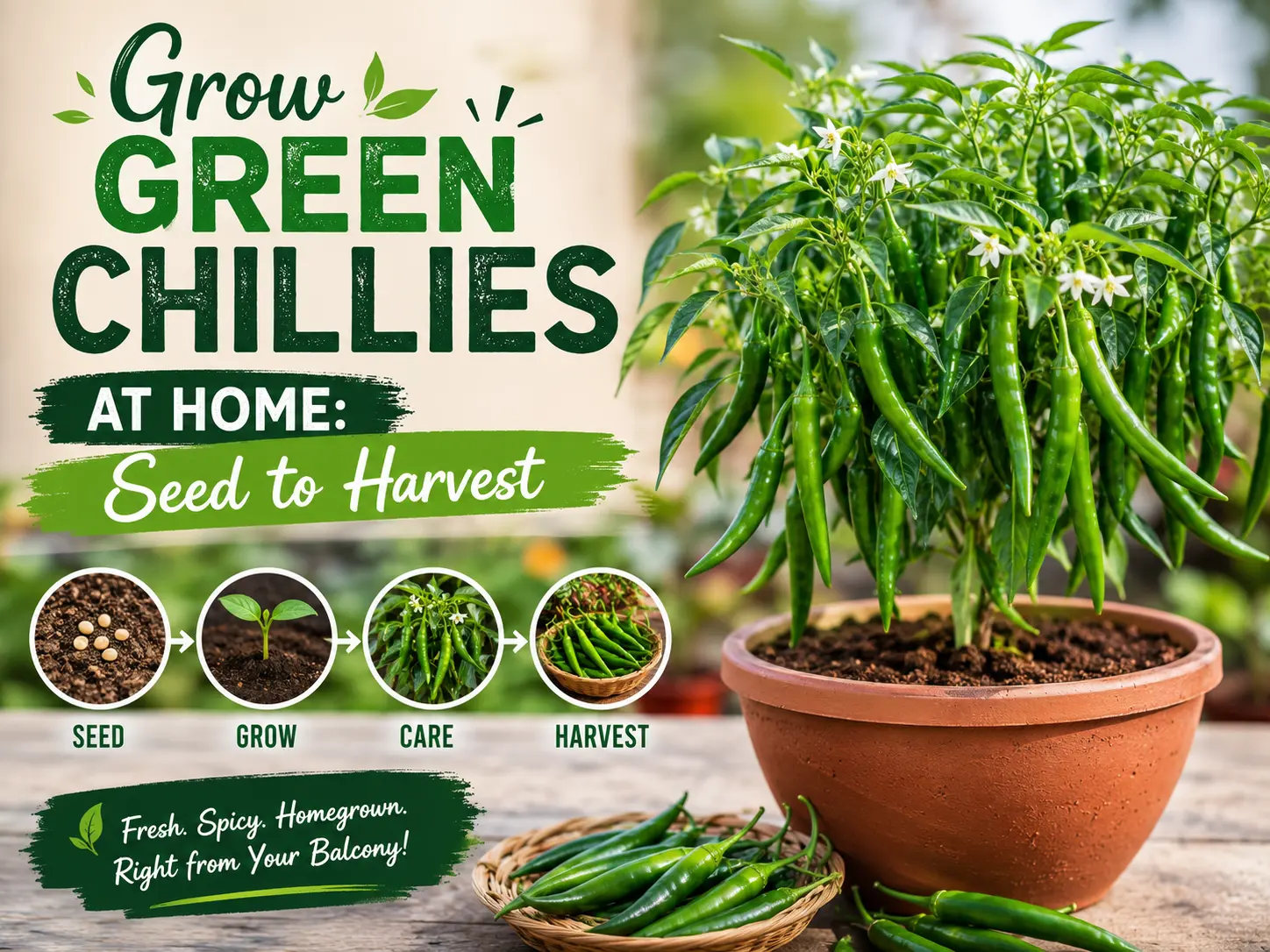
Few plants give as much joy — and flavour — for as little effort as the green chilli (milagai / மிளகாய்). A couple of healthy chilli plants on your terrace can keep your kitchen stocked all year. In this guide you'll learn exactly how to take green chillies from seed to a spicy harvest in about 90 days, completely organically.
Why Grow Your Own Green Chillies?
Chillies are perennial in tropical India, so one plant keeps producing season after season. They're compact enough for the smallest balcony, ornamental when laden with fruit, and far fresher than the market kind. Growing your own also lets you choose the heat level you love.
Step 1: Sowing Chilli Seeds
Sow seeds in a seed tray filled with a light coco-peat and compost mix. Place them about half a centimetre deep, mist gently, and keep warm. Chilli seeds germinate in 7–14 days. Keep seedlings in bright light so they don't grow leggy. At 4–6 true leaves (around 4 weeks), they're ready for their final pot.
Step 2: Pot and Soil
A 10–12 inch pot (about 8–10 litres) is plenty for one chilli plant. Ensure good drainage. Use a fertile, free-draining mix: two parts garden soil, one part compost, one part coco-peat or sand. A spoon of neem cake helps keep root pests away.
Step 3: Transplanting and Sunlight
Transplant one seedling per pot in the cool of the evening. Chillies need at least 6 hours of direct light a day. A sunny, airy spot keeps the plant strong and discourages fungal problems.
Step 4: Watering
Chillies like steady moisture but hate soggy roots. Water when the top inch of soil is dry, usually every 1–2 days in summer. Inconsistent watering causes flower drop. Mulching helps retain moisture in hot weather.
Step 5: Feeding for More Chillies
Feed every two weeks once established. Early on, a balanced organic feed builds foliage; once flowering starts, switch to a potassium-rich feed like wood ash or banana-peel tea to maximise fruiting.
Step 6: Encouraging Bushy Growth
When the plant is about 6–8 inches tall, pinch off the growing tip. This triggers side branches, giving a bushier plant with many more flowering points — and more chillies. Stake lightly if it gets top-heavy.
Common Pests and Organic Control
- Aphids & thrips: Neem oil spray (5 ml neem + 1 ml soap per litre) every 7–10 days.
- Mites: Increase humidity by misting and spray neem; they thrive in hot, dry conditions.
- Leaf curl: Often caused by sucking pests or virus — remove affected leaves and control the insects.
Step 7: Harvesting
Green chillies are ready about 70–90 days from sowing. Pick them green and firm for everyday cooking, or leave some to ripen red for a sweeter, hotter flavour and to save seeds. Harvest regularly — the more you pick, the more the plant produces. Use scissors to snip the fruit.
Saving Chilli Seeds for the Next Season
Let a few of the best fruits ripen fully to deep red on the healthiest plant, then pick, slit and scrape out the seeds. Dry them in shade for 4–5 days until completely dry, then store in a labelled paper envelope in a cool, dark place. Properly stored chilli seeds stay viable for 2–3 years. Save seeds from open-pollinated, non-hybrid plants so the next generation grows true.
Keeping Chillies Productive Through the Year
Because chilli is a perennial in warm climates, you can coax repeat harvests for a year or more. When fruiting slows, prune back by a third, refresh the topsoil with compost, and resume feeding. Watch for seasonal stresses: summer heat causes flower drop, heavy monsoon rain invites fungal leaf spots. Move pots to partial shade during the worst heat and ensure sharp drainage in the rains.
Growing Chillies in Containers vs the Ground
Container growing suits most home gardeners best. In a pot you control soil quality completely, can move the plant to chase sunlight or escape downpours, and keep it away from soil-borne diseases. The trade-off is more frequent watering and feeding. In the ground, chillies grow larger and need less watering, but you have less control over drainage and pests. For terraces, a 10–12 inch pot with good soil and steady care gives excellent results.
Frequently Asked Questions
How long does a chilli plant keep producing? In a warm climate, a healthy plant fruits for a year or more.
Why are my chilli flowers dropping? Heat stress, irregular watering, or too much nitrogen. Keep watering steady and feed for fruiting.
Can I grow chillies indoors? Only by a very bright, sunny window.
Should I pick chillies green or red? Both — green for everyday cooking, red for more heat, sweetness and seed saving.
Final Thoughts
A green chilli plant is one of the most rewarding crops for any home gardener. Give it sun, steady water, organic feeding and a pinch at the top, and within three months you'll be harvesting fresh, fiery chillies whenever you cook.
🌿 Grow Organic · Live Natural — with Sakthivel Organics
Follow us for daily gardening tips, videos and updates:
🛋 Shop organic seeds, tools and garden essentials at sakthivelorganics.com/products