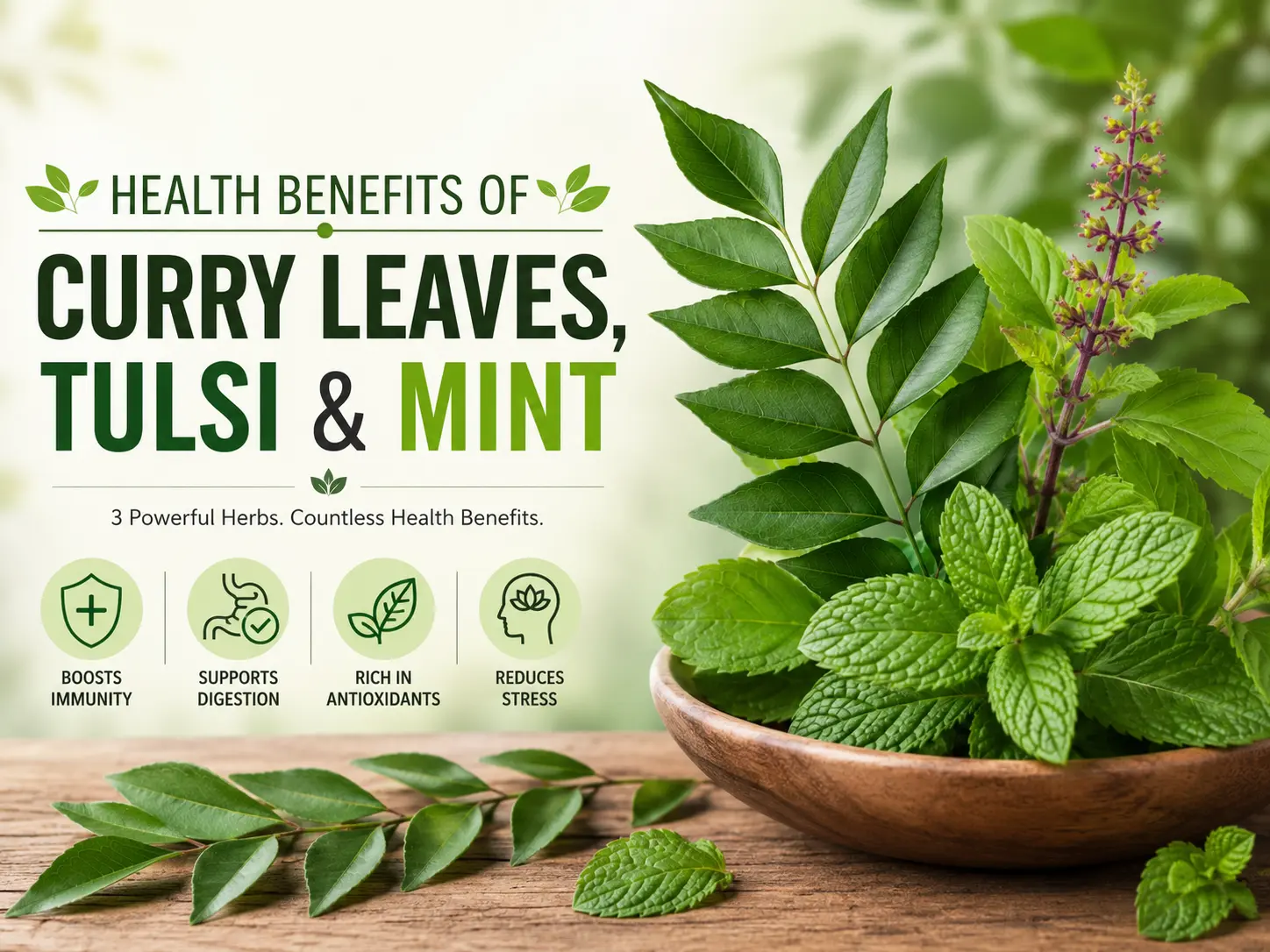
Three humble herbs sit in almost every Indian kitchen garden: curry leaf (karuvepillai), tulsi (holy basil) and mint (pudina). We toss them into tempering, brew them in tea, and chew them fresh — often without realising they are among the most powerful medicinal plants Ayurveda has ever celebrated. This guide explores the benefits of each, and shows how easily you can grow all three at home.
Curry Leaves (Karuvepillai / கருவேப்பிலை)
Far more than a flavour leaf, curry leaves are a nutritional powerhouse rich in iron, calcium, vitamin A and antioxidants.
- Aids digestion: They stimulate digestive enzymes and help relieve bloating, acidity and nausea.
- Supports hair health: Rich in beta-carotene and protein, traditionally used in hair oil to reduce hair fall and greying.
- Helps manage blood sugar: May help regulate blood glucose, valuable for people managing diabetes.
- Fights anaemia: Iron and folic acid help the body absorb and use iron effectively.
How to use: Eat fresh in chutneys, blend into smoothies, or chew young leaves on an empty stomach.
Tulsi / Holy Basil (Thulasi / துளசி)
Revered as a sacred plant and called the "Queen of Herbs," tulsi is a cornerstone adaptogen in Ayurveda.
- Boosts immunity: Antibacterial and antiviral compounds make it a classic remedy for colds, coughs and sore throats.
- Relieves stress: As an adaptogen, it helps lower cortisol and calm the nervous system.
- Supports respiratory health: Tulsi tea or kashayam soothes congestion, bronchitis and allergies.
- Rich in antioxidants: Fights free radicals, supporting heart health and reducing inflammation.
How to use: Brew 5–6 fresh leaves for tulsi tea, add to kashayam, or chew two leaves each morning.
Mint (Pudina / புதினா)
Cooling, fragrant and fast-growing, mint is the herb of summer — a digestive and respiratory aid prized across Ayurvedic and Unani traditions.
- Cools and refreshes: Menthol naturally lowers body heat — perfect for Tamil Nadu summers.
- Eases digestion: Relaxes the digestive muscles, relieving gas and indigestion.
- Freshens breath & soothes the throat: A natural antibacterial used in mouth fresheners and cough remedies.
- Clears the skin: Anti-inflammatory properties help calm acne when applied as a paste.
How to use: Make pudina chutney, add to buttermilk and lemonade, or infuse in water.
The Easiest Herbs to Grow at Home
- Curry leaf: Grows from a sapling or seed into a small tree; needs full sun and well-drained soil.
- Tulsi: Grows quickly from seed; loves sunlight. Remove flower spikes to keep leaves coming.
- Mint: Plant a few stem cuttings in moist soil and it spreads within weeks. Grow it in its own pot.
Simple Home Remedies Using These Three Herbs
- Tulsi-pepper kashayam for colds: Boil 8–10 tulsi leaves with crushed peppercorns, ginger and jaggery. Sip warm.
- Curry leaf hair tonic: Heat a handful of curry leaves in coconut oil until they crackle, cool, and massage into the scalp.
- Mint digestive water: Steep crushed mint leaves in warm water with cumin and black salt to relieve bloating.
- Tulsi morning ritual: Chewing two fresh leaves on an empty stomach supports immunity and oral health.
- Mint-curry leaf chutney: Blend both with tamarind, salt and green chilli for a digestion-boosting side.
Because you'll use these herbs directly on your body and in your food, growing them organically matters more here than anywhere else — no chemical residue, just pure plant goodness.
Keeping Your Herbs Productive Year-Round
The secret to a constant supply is regular harvesting and light feeding. Pinch curry leaf tips often to force bushy growth. Remove tulsi's flower spikes — once it flowers heavily it slows leaf production. Mint benefits from a hard trim every few weeks; cut it back by half and it returns thicker. Refresh the topsoil with compost every couple of months, and divide and replant mint and tulsi when woody to keep young, vigorous plants on hand.
A Note on Safe, Sensible Use
These herbs are food-safe and used for generations, but a little common sense goes a long way. Herbal remedies support wellbeing; they don't replace medical treatment for serious conditions. If you are pregnant, breastfeeding, on regular medication, or managing a chronic illness, check with your doctor before adding concentrated herbal teas — tulsi can interact with certain medications. Use herbs fresh where possible, and always wash home-grown leaves before eating.
Frequently Asked Questions
Can I eat curry leaves raw every day? Yes — a few fresh young leaves daily is a traditional and safe practice.
Is tulsi tea safe to drink daily? For most people, one or two cups a day is beneficial. Pregnant women should consult a doctor.
Why does my mint keep dying? Usually too little water or too much harsh sun. Mint likes moist soil and partial shade.
Do these herbs need chemicals? No. Organic compost and neem pest control keep them healthier and safe to eat.
Final Thoughts
Curry leaves, tulsi and mint prove that some of the most potent medicine grows quietly in a pot by your kitchen door. Grow all three organically, use them daily, and you'll tap into centuries of Ayurvedic wisdom.
🌿 Grow Organic · Live Natural — with Sakthivel Organics
Follow us for daily gardening tips, videos and updates:
🛋 Shop organic seeds, tools and garden essentials at sakthivelorganics.com/products