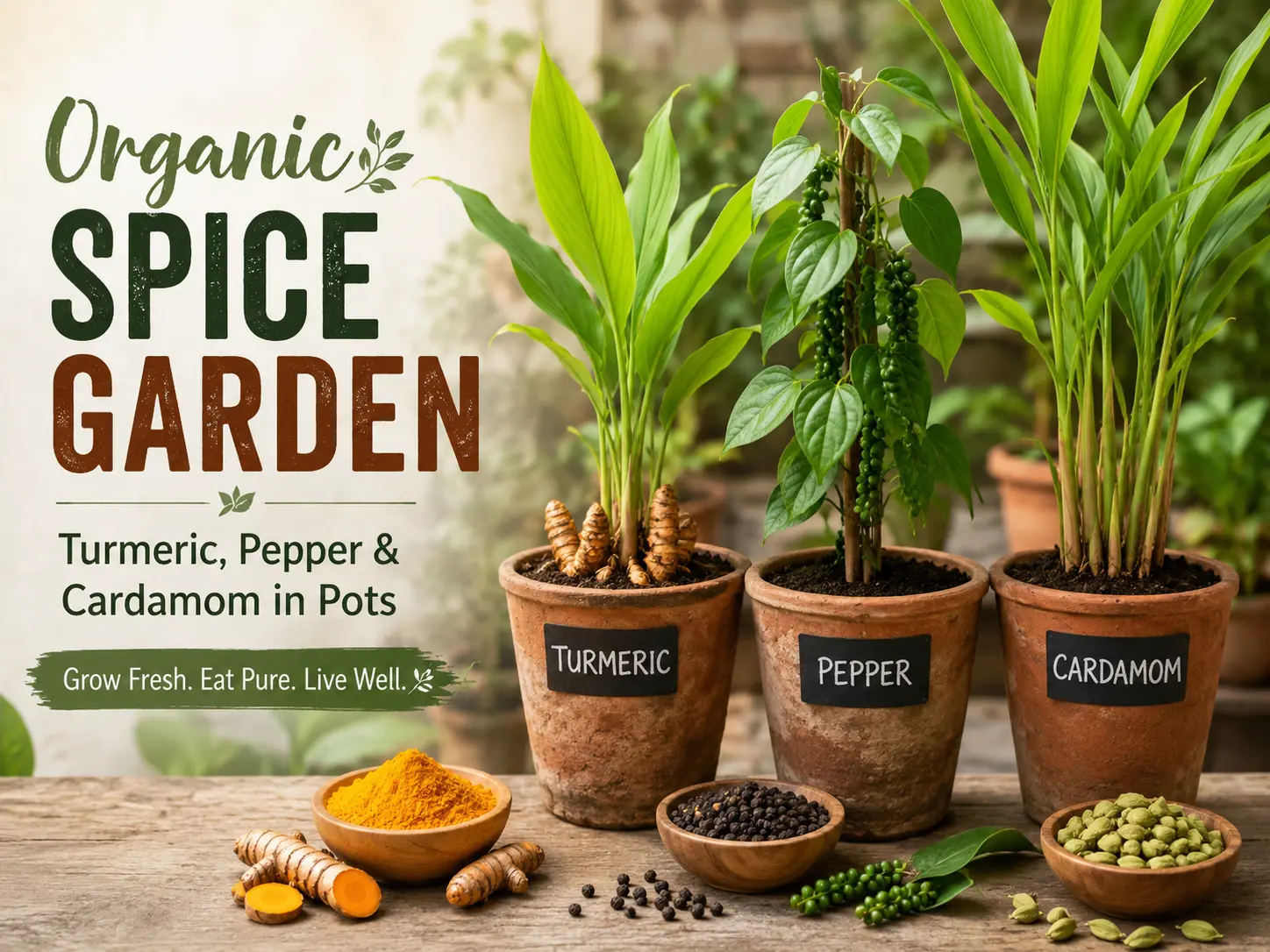
India is the spice capital of the world, yet most of us still buy our turmeric, pepper and cardamom in plastic packets — often adulterated, polished, or sprayed. The truth is that these three prized spices grow beautifully in pots, even on a modest terrace or balcony in South India. With a little patience and the right care, you can harvest your own fragrant, 100% organic spices right at home.
Why Grow Spices at Home?
Home-grown spices are fresher, more aromatic, and free from artificial colouring and pesticide residue. Turmeric in particular is frequently adulterated, so growing your own guarantees pure, high-curcumin rhizomes. Beyond purity, spice plants are ornamental and hardy — turmeric's broad leaves are lush, pepper vines green up a wall, and cardamom thrives in shady corners where other plants struggle.
1. Growing Turmeric (Manjal / மஞ்சள்) in Pots
Turmeric is the easiest spice to grow and the perfect starting point. It is grown from rhizomes — the same fingers you buy fresh in the market.
Planting
Choose a wide pot at least 12–15 inches deep. Fill with a loose mix of garden soil, compost and sand. Plant healthy rhizome pieces (each with 2–3 buds) about 2 inches deep, buds facing up. Best planting season is April to June, just before the monsoon.
Care
Turmeric loves warmth, humidity and partial sun. Keep the soil consistently moist but never waterlogged. Feed monthly with compost or organic liquid fertiliser. Leaves emerge within 3–4 weeks.
Harvest
Turmeric takes 8–10 months. When the leaves yellow and dry (usually January–March), stop watering, wait two weeks, then dig up the rhizomes. Boil, sun-dry and grind for your own pure turmeric powder.
2. Growing Black Pepper (Milagu / மிளகு) in Pots
Black pepper, the "king of spices," is a climbing vine that does surprisingly well in a large container with support.
Planting
Start from a healthy rooted cutting in a 14–16 inch pot with rich, well-draining soil. Provide a moss stick, trellis or wall for the vine to climb.
Care
Pepper prefers filtered light and high humidity. Keep soil moist and mist the vine in dry weather. Feed with compost and a potassium-rich organic feed (wood ash or banana-peel tea) to encourage flowering.
Harvest
A potted vine begins bearing spikes of berries in 2–3 years. Harvest when a few berries on each spike turn red, then sun-dry until they wrinkle and blacken into peppercorns.
3. Growing Cardamom (Elakkai / ஏலக்காய்) in Pots
Cardamom, the "queen of spices," is a shade-loving plant ideal for that dim balcony corner where nothing else grows.
Planting
Plant rhizomes or seedlings in a wide, deep pot with rich, humus-heavy soil. Place it in bright shade away from harsh direct sun.
Care
Consistent moisture and humidity are key — never let the soil dry out. Feed generously with compost and leaf mould. Misting and mulching help in hot, dry months.
Harvest
Cardamom takes 2–3 years to flower and fruit. The pods grow at the base of the plant; harvest when plump and green, then dry slowly in shade.
✂️ Healthy harvesting needs the right tools. Our Premium Garden Pruning Shears make trimming pepper vines and harvesting pods quick and damage-free.
Organic Care Tips for All Spice Plants
- Feed naturally: Rotate compost, cow-dung manure and liquid bio-fertilisers rather than chemical NPK.
- Mulch well: A layer of dried leaves or coco-peat keeps roots cool and moist.
- Control pests organically: Neem oil spray every 10–14 days handles scale, mealybugs and mites.
- Repot when crowded: Turmeric and cardamom multiply underground; divide every couple of years.
Companion Planting and Maximising Your Spice Corner
A small terrace can hold a complete spice corner if you plan well. Turmeric and ginger grow happily side by side in similar conditions. Pepper vines climb vertically, freeing floor space — train one up a corner wall while pots sit at its base. Cardamom thrives tucked beneath taller plants that filter the afternoon sun. Interplanting with marigold or basil repels pests naturally. Think in layers: tall climbers at the back, medium leafy plants in the middle, low shade-lovers below — mimicking a forest to grow more in limited space.
Storing and Using Your Home-Grown Spices
Proper curing separates dull spices from fragrant ones. Turmeric must be boiled, sun-dried 10–15 days until rock-hard, then ground. Pepper berries are sun-dried about a week until they wrinkle and blacken. Cardamom should be dried slowly in shade to preserve its green colour and oils. Store dried spices whole in airtight glass jars away from light and heat, and grind only as needed — whole spices keep their aroma for a year or more.
Frequently Asked Questions
Can I grow these spices on a city balcony? Yes. Turmeric and cardamom suit shaded balconies; pepper needs a trellis and filtered light.
How long until I can harvest? Turmeric in 8–10 months; pepper and cardamom take 2–3 years but reward you for years after.
Which is easiest for beginners? Turmeric — plant a market rhizome and you'll have leaves in a month.
Do spice plants need full sun? No. Turmeric likes partial sun; pepper and cardamom prefer filtered light or shade.
Final Thoughts
An organic spice garden is one of the most rewarding projects a home gardener can take on. Start with turmeric this season for a quick win, then add a pepper vine and a cardamom plant. Within a few years you'll be seasoning meals with spices you grew yourself.
🌿 Grow Organic · Live Natural — with Sakthivel Organics
Follow us for daily gardening tips, videos and updates:
🛋 Shop organic seeds, tools and garden essentials at sakthivelorganics.com/products