Sakthivel Organics
Grow Organic · Live Natural
Grow Organic · Live Natural

Grow Organic · Live Natural
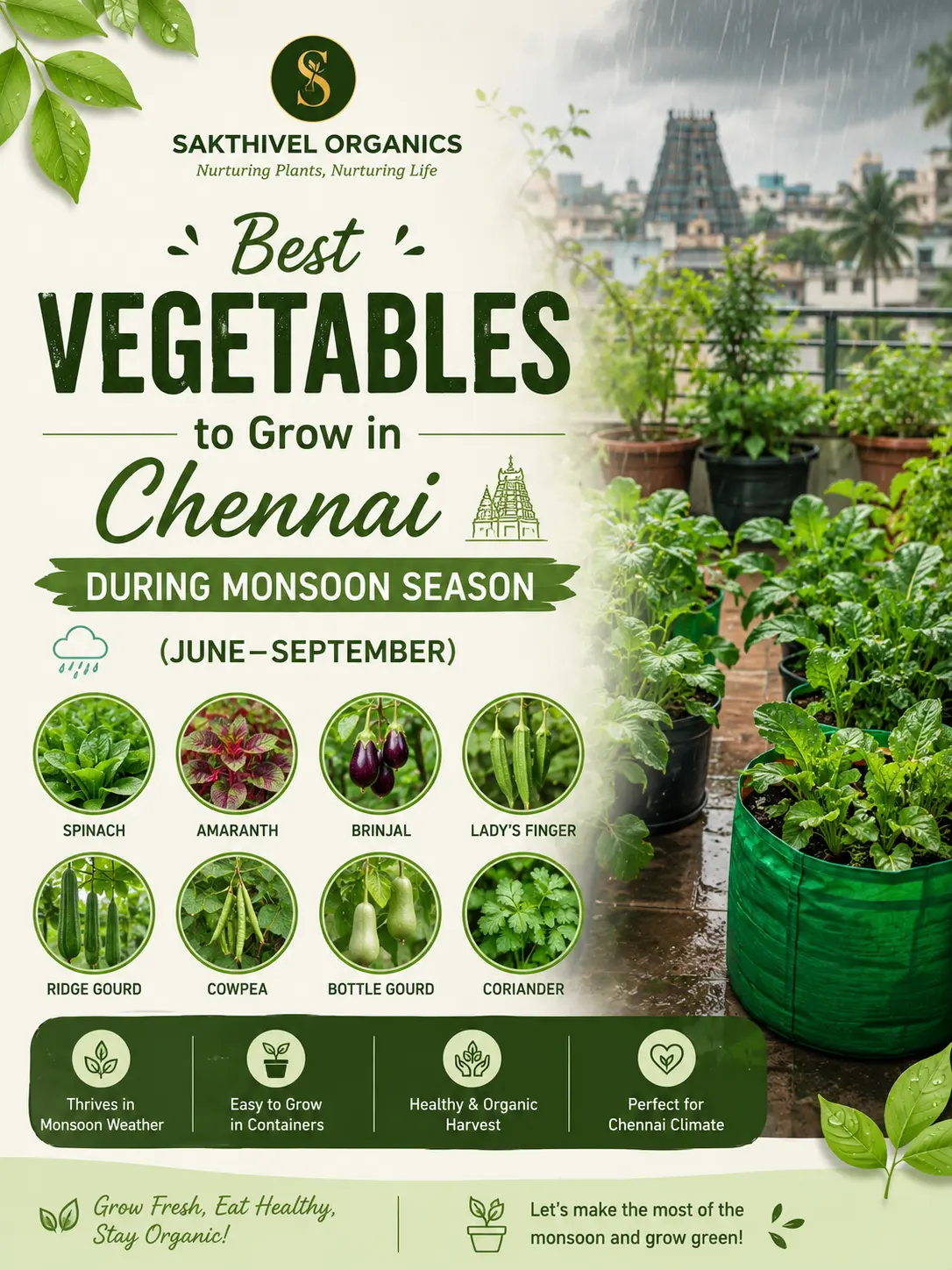
Between June and September, Chennai turns warm, humid, and dotted with sudden showers from the southwest monsoon. While the city's heaviest rains arrive later in the year, these mid-year months are one of the most rewarding times to garden — the soil stays warm, moisture is plentiful, and plants grow fast. The secret is simple: pick vegetables that love heat and humidity and won't rot in soggy soil.
In this guide you'll learn exactly which vegetables thrive in a Chennai monsoon, when and how to sow them, and the organic care tips that keep terrace and balcony gardens productive through the rain. Let's grow. 🌱
The southwest monsoon brings warm days (around 30–36°C), high humidity, and short, intense showers rather than continuous downpours. For vegetables, that means:
The flip side is humidity-loving pests and fungal problems, plus the risk of waterlogged roots. We'll tackle both further down — but first, the stars of the season.
The fastest, most foolproof monsoon crop. Amaranthus loves heat and humidity and is ready to harvest in under a month. Broadcast seeds thinly in a wide pot or grow bag, keep the surface moist, and start snipping young leaves in 3–4 weeks.
Best for: beginners and small spaces · Days to harvest: 25–35
Another quick, cut-and-come-again green. Give it a spot with morning sun and afternoon shade so the leaves stay tender in the heat.
Days to harvest: 30–40
If there's one group of vegetables built for the Chennai monsoon, it's the gourds. They're vigorous climbers that thrive in humidity — just give them a trellis, a railing, or an overhead net to scramble up.
One of the most productive monsoon climbers. Sow seeds directly in a deep container or grow bag, provide a strong trellis, and you'll be harvesting tender ridge gourds within two months.
Days to harvest: 55–65
A heavy yielder that rewards you with large, mild-tasting gourds. It needs space and a sturdy support — perfect for a terrace pergola or balcony grille.
Days to harvest: 60–70
Loves the humid monsoon air. Hang a small weight from young fruits to keep them growing straight.
Days to harvest: 60–70
A warm-season favourite that fruits well in the monsoon. A little neem spray keeps fruit flies away.
Days to harvest: 55–70
The classic Chennai monsoon vegetable. Vendakkai genuinely loves heat and humidity, grows happily in a grow bag, and keeps producing for weeks if you harvest regularly. Sow directly, water deeply, and pick the pods young and tender.
Days to harvest: 45–55 · Grow it from our organic vendakkai seeds.
A hardy, heat-loving perennial that can produce for months. Start from a healthy transplant, stake the plant, and mulch the base to prevent soil splash during rain.
Days to harvest: 70–85
Thrive in warm, humid conditions and are perfect for pots. Both green and ripe red chillies come from the same plant — just leave a few longer on the bush.
Days to harvest: 70–90
Tough, drought- and heat-tolerant, and an excellent soil-improver. A reliable choice when the weather swings between hot spells and sudden rain.
Days to harvest: 50–60
Tomatoes can be grown in the monsoon, but humidity invites fungal disease. Use containers with excellent drainage, give plants plenty of space and airflow, stake them off the ground, and spray neem oil preventively. Choose a sheltered spot that avoids the heaviest rain.
Days to harvest: 65–80 · Start with our organic tomato seeds.
| Vegetable | Tamil Name | Days to Harvest | Best For |
|---|---|---|---|
| Amaranthus greens | Mulai Keerai | 25–35 | Beginners, small pots |
| Okra | Vendakkai | 45–55 | Grow bags, full sun |
| Cluster beans | Kothavarai | 50–60 | Tough conditions |
| Ridge gourd | Peerkangai | 55–65 | Trellis / railing |
| Bitter gourd | Pavakkai | 55–70 | Trellis |
| Bottle gourd | Suraikai | 60–70 | Large terrace |
| Brinjal | Kathirikai | 70–85 | Long harvest |
| Chillies | Milagai | 70–90 | Pots, balconies |
| Tomato | Thakkali | 65–80 | Sheltered, well-drained |
Prefer to learn by watching? See how we grow and care for plants in real Chennai conditions on our channel. Here's our latest video on growing and reviving curry leaf plants:
👉 How to Grow a Healthy Curry Leaf Plant (Tamil)
Subscribe to @SakthivelOrganics for weekly Tamil gardening videos.
Choosing the right plant is only half the job. These habits keep your monsoon garden healthy through the humidity and rain:
Waterlogged roots are the number-one killer of monsoon container plants. Drill extra holes in grow bags, raise pots on bricks, and use a free-draining potting mix (garden soil + compost + coco peat + a little sand).
When it's raining, your plants may need no extra water for days. Check the soil with your finger before watering — if it's still damp 2 cm down, skip it.
Humidity breeds fungal disease. Space plants for airflow, water at the base (not the leaves), and spray a mild neem oil solution every 7–10 days as a preventive.
A layer of dry leaves or straw stops heavy rain from splashing soil (and soil-borne disease) onto your plants, and keeps the root zone steady.
Put up trellises and stakes before the vines need them. A strong support means more fruit and fewer broken stems in gusty monsoon winds.
The right tools make this easy. Browse our organic gardening tools and supplies to get your monsoon garden set up properly.
Amaranthus greens (mulai keerai) are the quickest — you can harvest tender leaves in just 3–4 weeks, making them perfect for first-time gardeners.
Yes, but with care. Use well-draining containers, give plants good spacing and airflow, stake them off the ground, and spray neem oil to prevent fungal disease. A sheltered spot away from the heaviest rain helps a lot.
It's an excellent time. Warm soil and natural rainfall give seeds a strong, fast start — just make sure every container drains freely so roots don't sit in water.
Greens, chillies, okra, and brinjal all do well in pots and grow bags, so even a sunny balcony can keep your kitchen supplied.
Get everything you need to grow your own food this season:
Questions about what to grow? WhatsApp us at 9840602976 — we're happy to help. 🌿
Grow Organic · Live Natural
Happy gardening, and may your monsoon harvest be a green one! 🌧️🌱
Notifications